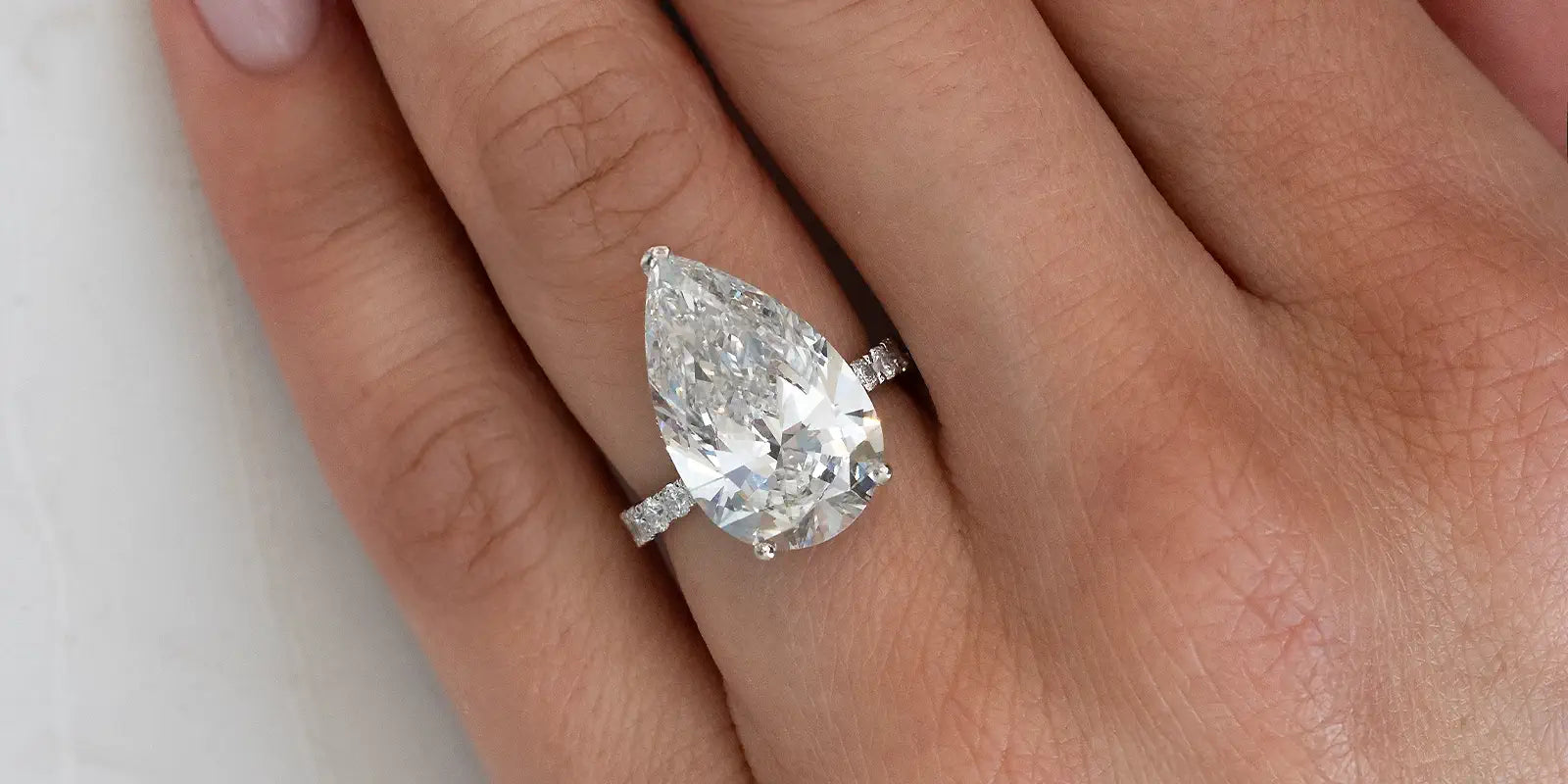
 White Lab Diamond Rings
 Blue Lab Diamond Rings
 Pink Lab Diamond Rings
 Yellow Lab Diamond Rings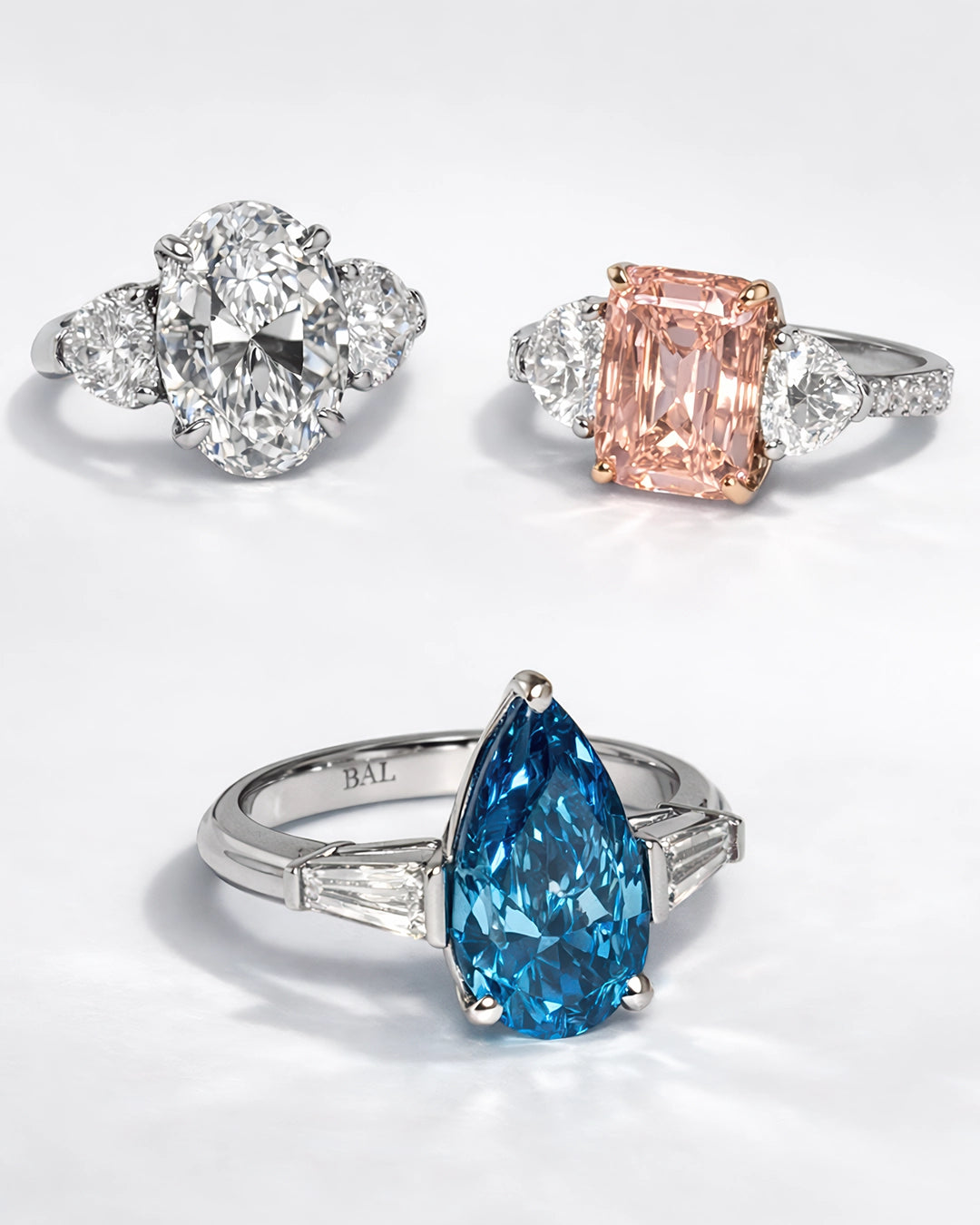

 Round Lab Diamond Engagement Rings
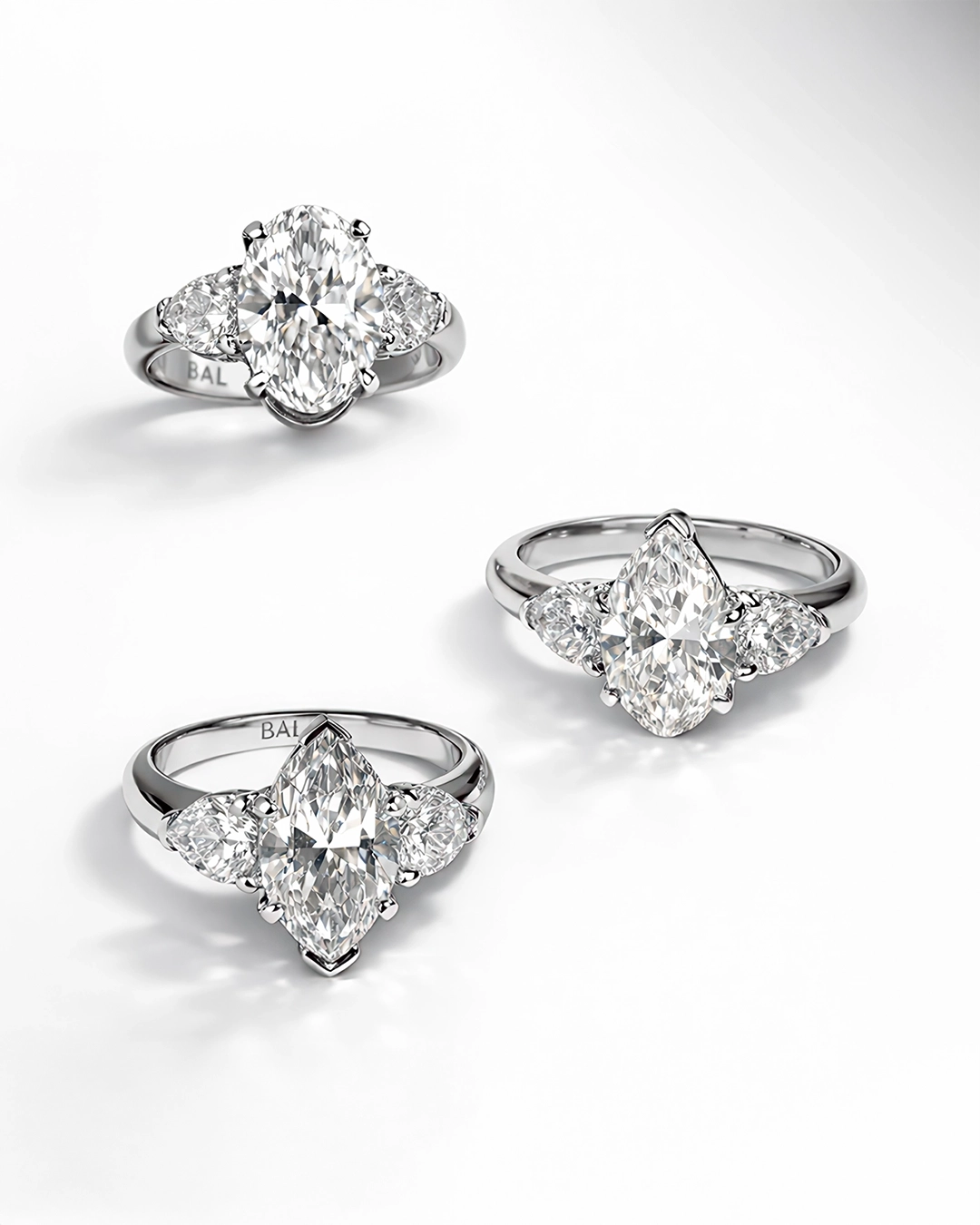
 Oval Lab Diamond Engagement Rings
 Pear Lab Diamond Engagement Rings
 Cushion Lab Diamond Engagement Rings
 Emerald Lab Diamond Engagement Rings
 Radiant Lab Diamond Engagement Rings
 Heart Lab Diamond Engagement Rings
 Marquise Lab Diamond Engagement Rings
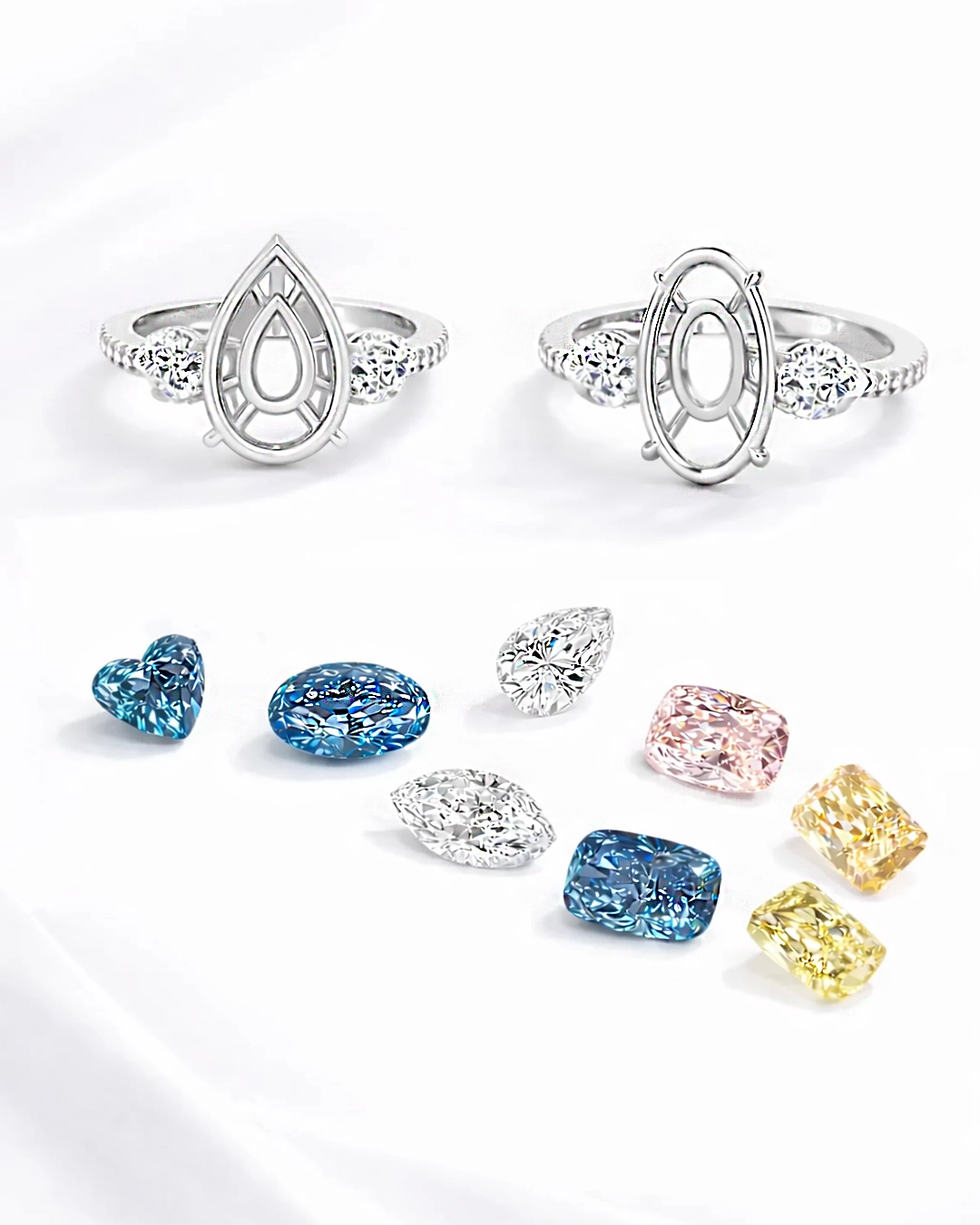
 What are Lab-Grown Diamonds ?
 Lab-Grown vs. Natural Diamonds
 CVD vs. HPHT
 What are the 4Cs?
 How to read a diamond certificate ?
 Fancy Color Grading
 Ring Sizes
 Pendant Lengths
 Bracelet Sizes
 Metals Guide: 14k or 18k Gold?
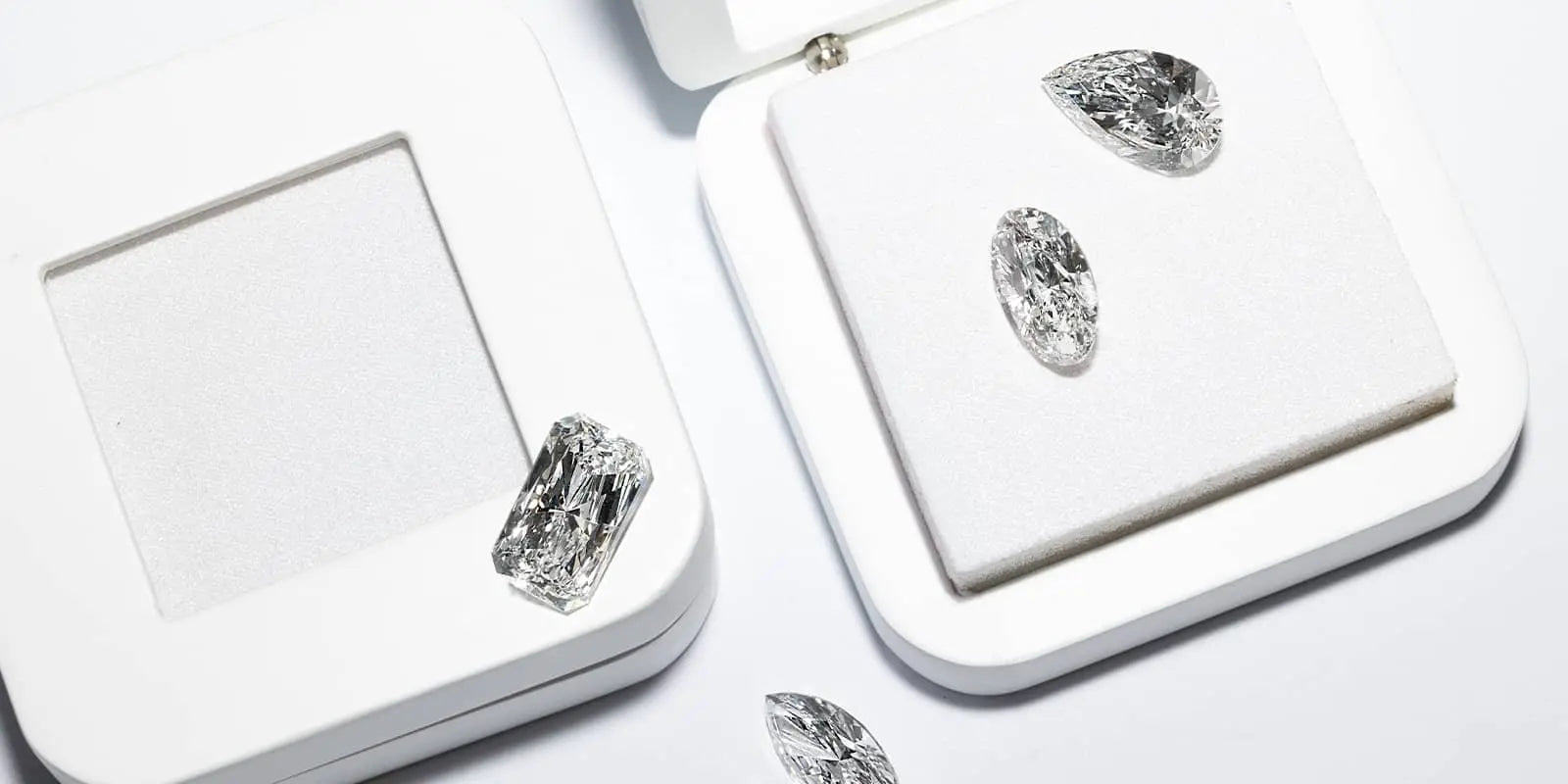
Moissanite vs Lab-Grown Diamond: Which Should You Choose?
uTwo names come up in almost every diamond conversation today: moissanite and lab-grown diamond. They are not the same material, not the same category, and not interchangeable, but the confusion is understandable. Both are colorless, both are lab-created, and both are marketed as modern alternatives to mined stones. The difference is in what they actually are, and that changes everything: how they look in light, how they are graded, what they cost, and what you are actually buying.
This guide covers every meaningful difference in material, visual performance, durability, certification, and value, written from a diamantaire perspective.
WHAT EACH STONE ACTUALLY IS
The key difference is the material itself. Once that is clear, the rest of the comparison becomes much easier to understand.
Lab-grown diamond
A lab-grown diamond is a real diamond. It is composed of pure carbon, the same chemical composition and crystal structure as a mined diamond. The only difference is origin: it was grown in a controlled laboratory environment rather than extracted from the earth. No jeweller, consumer, or basic instrument can tell the difference.
Moissanite
Moissanite is silicon carbide (SiC). It is a different mineral entirely. It was first discovered in 1893 by French chemist Henri Moissan inside a meteorite crater in Arizona, which is where its name originates. Natural moissanite is extraordinarily rare. Every piece of moissanite jewelry sold today is laboratory-created.
They are not the same category of product at different price points. They are different materials that happen to both be colorless, hard, and lab-created. That is where the similarity ends.
Critical distinction: moissanite and lab-grown diamond are two entirely different materials. Being lab-created is the only characteristic they share.
HOW THEY LOOK: THE LIGHT DIFFERENCE
Both stones are bright. But they handle light in fundamentally different ways, and the reason is physics.
Lab-grown diamond:
A lab-grown diamond has a refractive index of 2.42, identical to that of a mined diamond. It produces balanced brilliance: controlled white light returns with subtle rainbow flashes. This is the light signature that reads as a diamond.
Moissanite:
Moissanite has a refractive index of 2.65 to 2.69. It is also doubly refractive, meaning it bends light twice as it passes through the stone. The result is intense, colorful flashes, more fire than a diamond, but less controlled. At larger carat weights and under direct light, this produces a vivid and high-impact look, but one that is distinctly not a diamond.
In low light or at smaller sizes, the difference is minimal to the untrained eye. In sunlight, or at 1.50ct and above, it becomes immediately apparent to anyone who knows what to look for. Whether that matters depends on what you are buying the stone for.
Comparaison to the naked eye:
At 0.50ct and below, casual observation will not reliably tell them apart. At 1ct and above in direct light, sunlight, a bright room, a jewelry photograph, the difference becomes visible. Moissanite produces stronger, more colorful light flares. A lab-grown diamond returns a cleaner, more restrained reflection.
Comparaison under magnification:
The double refraction of moissanite is immediately visible under a loupe or microscope. Facet edges appear doubled, a diagnostic feature absent in diamonds. Any qualified diamantaire or gemologist can identify moissanite at 10x magnification in seconds.
In photography:
In jewelry photography, moissanite produces more intense, colored light bursts, particularly under studio lighting. Lab-grown diamonds photograph with more control and evenness. This distinction is most pronounced in high-resolution images of stones above 1ct.

DURABILITY
Both stones are exceptionally hard and suitable for daily wear. A lab-grown diamond scores 10 on the Mohs hardness scale, the maximum. Moissanite scores 9.25, making it the second hardest material commonly used in fine jewelry. Both outperform sapphire, ruby, and all other gemstones typically set in rings.
For most clients, durability is not a meaningful deciding factor between the two. Both will survive decades of daily wear without issue. The more important differences lie in optical performance, certification, and material identity.
CERTIFICATION AND STONE KNOWLEDGE

Lab-grown diamonds are graded using the same system as mined diamonds: cut, color, clarity, and carat, assessed by independent gemological laboratories such as IGI and GIA. Every stone above 1.00ct sold by BÄL Diamonds comes with independent certification. You know precisely what you are buying.
Moissanite does not have an equivalent grading standard. Quality varies between manufacturers, and there is no universally recognized certification body to validate what you are purchasing. This makes stone-to-stone comparison difficult and limits transparency in the buying process.
Why this matter? For a diamantaire, stone selection is not just about carat weight, it is about cut precision, light performance, fluorescence, and visual behavior in natural conditions. All of that is documented and verifiable with a certified lab-grown diamond. With moissanite, it is not.
How to read a diamond certificate
THE DIAMOND TESTER PROBLEM
Moissanite will register as a diamond on standard thermal conductivity diamond testers. This is one of the most misunderstood facts in the jewelry market. It does not mean moissanite is a diamond, it reflects a shared thermal property between the two materials.
To distinguish moissanite from a diamond correctly, a moissanite-specific tester measuring electrical conductivity is required. Moissanite is electrically conductive; diamonds are not. Any professional diamantaire or reputable jeweller has the correct equipment. This distinction matters particularly when buying or reselling stones without independent grading certificates.
Standard diamond testers will falsely identify moissanite as a diamond. Correct identification requires a separate electrical conductivity tester or loupe inspection by a trained diamantaire.
PRICE AND VALUE
Moissanite is cheaper than a lab-grown diamond. That is a fact. But the more relevant question is what you are actually getting for the difference.
A certified lab-grown diamond, graded by IGI or GIA, selected for cut precision and light performance is a completely different product from a moissanite stone with no independent grading. The price difference reflects that. You are not paying more for the same thing. You are paying for a real diamond, with verified quality, that looks like one.
For many buyers, the price difference no longer represents a compelling argument for choosing a substitute material. At BÄL Diamonds, pricing is fully transparent. What you see on the product page is what you pay.
For buyers who want the largest stone at the lowest possible cost. Moissanite makes that calculation straightforward.
For buyers who want fine jewelry. A real diamond with verified quality and material integrity, the price difference reflects the standard. A lab-grown diamond is the correct choice.
CUBIC ZIRCONIA VS MOISSANITE VS LAB-GROWN DIAMOND
The three most commonly discussed colorless stone options differ significantly in material, optical performance, and long-term value. Here is the complete breakdown:
Cubic Zirconia |
Moissanite |
Lab-Grown Diamond |
|
| Material | Zirconium oxide | Silicon carbide (SiC) | Pure carbon — same as mined diamond |
| Hardness | 8–8.5 Mohs | 9.25 Mohs | 10 Mohs (maximum) |
| Refractive Index | 2.15–2.18 | 2.65–2.69 (doubly refractive) | 2.42 — identical to mined |
| Light Behavior | Bright, clouds over time | Colorful fire, high dispersion | Balanced white brilliance |
| Durability | Scratches, clouds with wear | Excellent | Excellent |
| Certification | None | Manufacturer spec only | IGI / GIA — full 4Cs grading |
| Resale Value | None | Negligible | Verifiable asset |
| Price | Lowest | Mid-range | Higher than CZ/moissanite; below mined |
| Best For | Fashion / costume jewelry | Budget buyers wanting impact | Buyers who want a real diamond |
CHOOSING FOR AN ENGAGEMENT RING

The answer depends on what the buyer actually wants from the purchase.
If the goal is a stone that looks like a diamond, is backed by independent certification, and meets the standard of fine jewelry, lab-grown diamond is the stronger choice. It is a real diamond, graded, verified, and selected for visual performance. For a piece worn every day and looked at for years, most buyers who want a diamond will find no meaningful argument for choosing a substitute.
If the goal is simply to maximize stone size at the lowest possible cost, moissanite makes that calculation straightforward. It is a durable, lab-created gemstone that delivers visual impact at a lower price point.
An engagement ring with a certified lab-grown diamond has a grading report attached to the stone. The cut, color, clarity, carat, and fluorescence are all documented. A moissanite stone has no equivalent. For a purchase of this significance, knowing exactly what you are buying matters.
At BÄL Diamonds. Every stone is hand-selected by diamantaires for cut, color, clarity, fluorescence, and overall visual performance in natural light. At BÄL Diamonds, we carry a wide range of lab diamond jewelry, from Engagement Rings to stunning Tennis Bracelets, all designed to reflect the true beauty of these remarkable stones. We do not carry moissanite. What we offer is precision-selected lab-grown diamonds, set in 18k gold, made to order from our Dubai atelier. All stones above 1.00ct ship with independent certification.
RESALE VALUE
Moissanite has very limited resale value. There is no widely recognized grading system for moissanite, which makes stone-to-stone comparison impossible for buyers in the secondary market. Without independent certification, a buyer has no way to verify the quality of a pre-owned moissanite stone. This limits the resale market considerably.
Lab-grown diamonds, by contrast, come with IGI or GIA grading reports for stones above 1.00ct. These documents travel with the stone and allow any buyer or jeweller to independently verify what they are purchasing. They are not traditional investment vehicles, but they are graded assets with an established secondary market and verifiable documentation.
WHERE TO BUY LAB-GROWN DIAMONDS IN DUBAI
Dubai is one of the world's leading jewelry destinations. The Gold & Diamond Park is a dedicated jewelry district, home to ateliers, manufacturers, and retailers concentrated in a single professional complex.
BÄL Diamonds offers a more considered way to buy lab-grown diamonds. The private showroom at Gold & Diamond Park provides an appointment-only experience where stones can be viewed, configurations discussed, and pieces commissioned in a setting designed for privacy and precision.
Book a private showroom appointment
For international clients, the full collection is available online with worldwide shipping. Every piece is made to order in 18k gold, with hand-selected lab-grown diamonds and independent certification for stones above 1ct.