
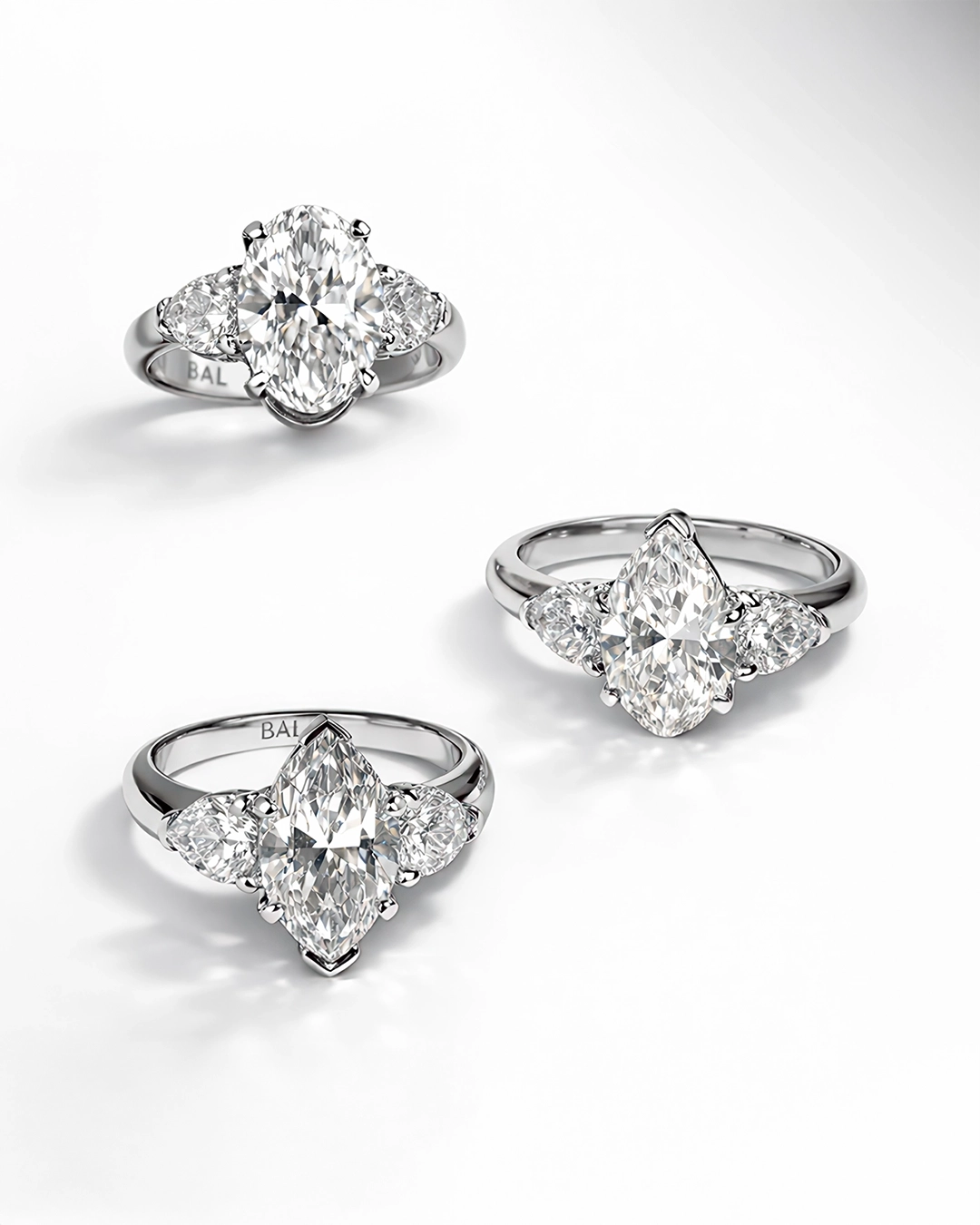
 White Lab Diamond Rings
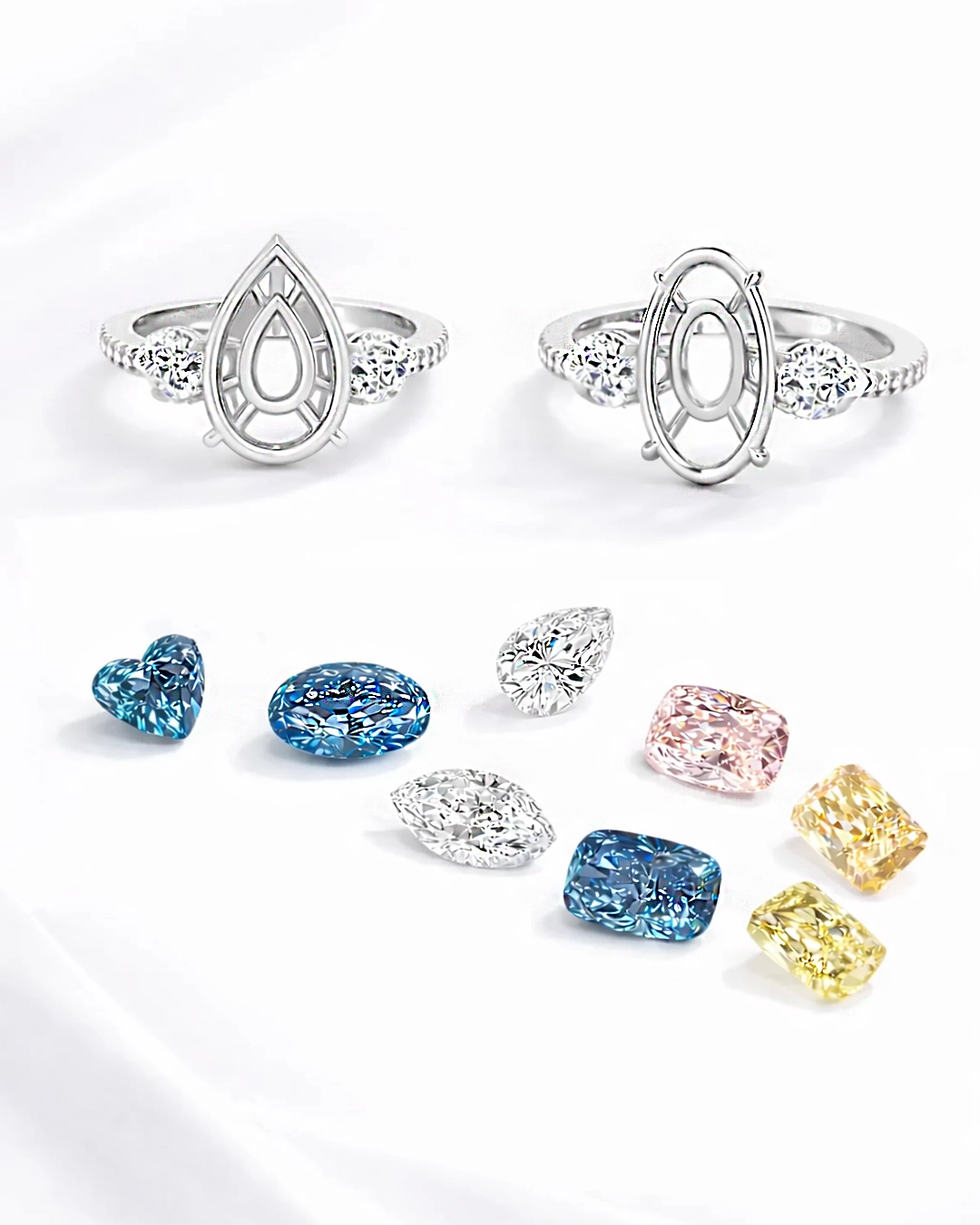
 Blue Lab Diamond Rings
 Pink Lab Diamond Rings
 Yellow Lab Diamond Rings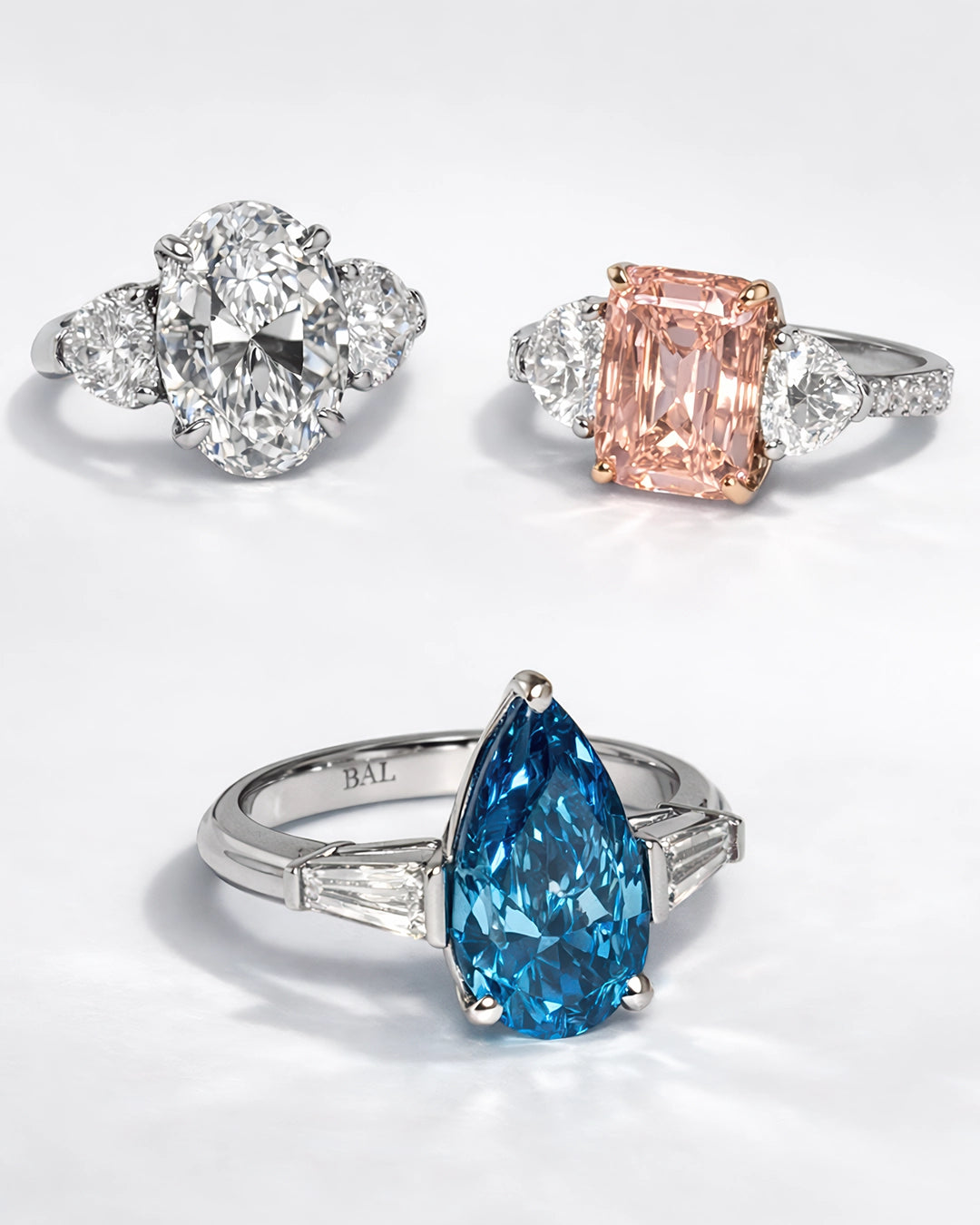

 Round Lab Diamond Engagement Rings
 Oval Lab Diamond Engagement Rings
 Pear Lab Diamond Engagement Rings
 Cushion Lab Diamond Engagement Rings
 Emerald Lab Diamond Engagement Rings
 Radiant Lab Diamond Engagement Rings
 Heart Lab Diamond Engagement Rings
 Marquise Lab Diamond Engagement Rings
 What are Lab-Grown Diamonds ?
 Lab-Grown vs. Natural Diamonds
 CVD vs. HPHT
 What are the 4Cs?
 How to read a diamond certificate ?
 Fancy Color Grading
 Ring Sizes
 Pendant Lengths
 Bracelet Sizes
 Metals Guide: 14k or 18k Gold?
Lab-Grown Diamonds
What Is a Lab-Grown Diamond?
Lab-grown diamonds are 100% real diamonds created in a controlled laboratory environment using advanced technology that replicates the natural diamond-growing process. Chemically, physically, and optically identical to mined diamonds, they offer the same hardness, brilliance, and fire only their origin differs. Also known as cultivated or lab-created diamonds, they are formed in weeks to months rather than over billions of years deep within the Earth.
Lab-Grown Diamond
|
LAB GROWN DIAMOND |
NATURAL DIAMOND |
SUMMARY |
|
|
DURABILITY |
Rated 10 on the Mohs scale for superior durability and long-lasting wear. |
Rated 10 on the Mohs scale for superior durability and long-lasting wear. |
NO DIFFERENCE |
|
BRILLIANCE |
Displays remarkable brilliance and fire, reflecting light with precision; refractive index measures 2.417–2.419. |
Renowned for its enduring radiance and exceptional luminosity; refractive index measures 2.417–2.419. |
NO DIFFERENCE |
|
COLOR |
Primarily colorless, with the ability to produce a wide range of hues, often more vivid than naturally occurring options |
Primarily colorless, with rare occurrences in pink, blue, yellow, and other natural hues |
Lab-Grown: Greater control over vivid, uniform color |
|
GRADING |
Evaluated using the same globally recognized 4Cs standards for consistent quality |
Assessed using the same globally recognized 4Cs standards for proven value |
NO DIFFERENCE |
|
CERTIFICATION |
Independently certified by IGI or GIA for quality and authenticity |
Independently certified by IGI or GIA for quality and authenticity |
NO DIFFERENCE |
|
ORIGIN |
Lab grown diamonds are produced in factories in just 3 to 4 weeks and can be made in unlimited quantities |
Formed naturally over billions of years beneath the Earth |
Lab-grown for sustainability, natural for traditional value |
|
RARITY |
Modern innovation allows greater availability |
Naturally rare and finite |
Natural: |
|
PRICE |
Lower cost due to availability |
Higher cost due to mining and rarity |
Lab-Grown:More affordable for the same quality |
Lab-grown diamonds are virtually identical to natural diamonds in appearance, brilliance, and physical properties. To the naked eye, it’s impossible to distinguish between the two. Only special machines can detect subtle differences. This means that for everyday wear, both lab-grown and natural diamonds look equally stunning, sparkling, and luxurious.
DIAMOND SIZE CHART
|
mm |
ct |
points |
|
2.50 |
0.06 |
6 |
|
3.00 |
0.10 |
10 |
|
3.50 |
0.15 |
15 |
|
3.75 |
0.20 |
20 |
|
4.25 |
0.30 |
30 |
|
4.75 |
0.40 |
40 |
|
5.00 |
0.50 |
50 |
|
5.75 |
0.70 |
70 |
|
6.25 |
0.90 |
90 |
|
6.50 |
1.00 |
100 |
The 4Cs of Lab-Grown Diamond
Every lab-grown diamond is evaluated based on the internationally recognized 4Cs: Carat, Cut, Color, and Clarity. These standards ensure consistent quality, brilliance, and value.

CUT
Among all the 4Cs, Cut has the greatest impact on a diamond’s visual appeal. The quality of the cut reflects the skill and precision of the cutter. A well-proportioned and expertly crafted lab-grown diamond maximizes light reflection, producing exceptional sparkle, fire, and brilliance. Cut quality is further assessed through polish, symmetry, and proportions, each graded from Excellent to Fair. Polish evaluates the smoothness of a diamond’s surface, symmetry measures the precision and alignment of its facets, and proportions refer to the balance between a diamond’s dimensions. Higher grades ensure optimal light performance and a refined overall appearance.

Color
Diamond color is graded on a scale from D to Z, divided into categories: Colorless (D–F), Near Colorless (G–J), Faint (K–M), Very Light (N-R), and Light (S-Z). Colorless diamonds are chemically pure and show almost no hue, while lower grades display subtle yellow or brown tones caused by trace elements like nitrogen. For the untrained eye, differences are barely visible unless diamonds are several grades apart, especially when viewed face up.
Fancy colored Lab-Grown diamonds
Fancy colored lab diamonds are valued for their rarity and vivid hues, naturally occurring in colors like pink, blue, and yellow. Only about 1% of lab-grown diamonds are colored, enhancing their exclusivity. Their value is based on hue (color), tone (lightness or darkness), and saturation (intensity). The grading scale measures color from soft to highly vivid:
- Fancy Light / Light: Subtle, pastel tones with delicate presence.
- Fancy: Clear, well-defined color with elegant vibrancy.
- Fancy Intense: Deep, richly saturated color with strong visual impact.
- Fancy Vivid: Most intense, vibrant hues commanding the highest value.
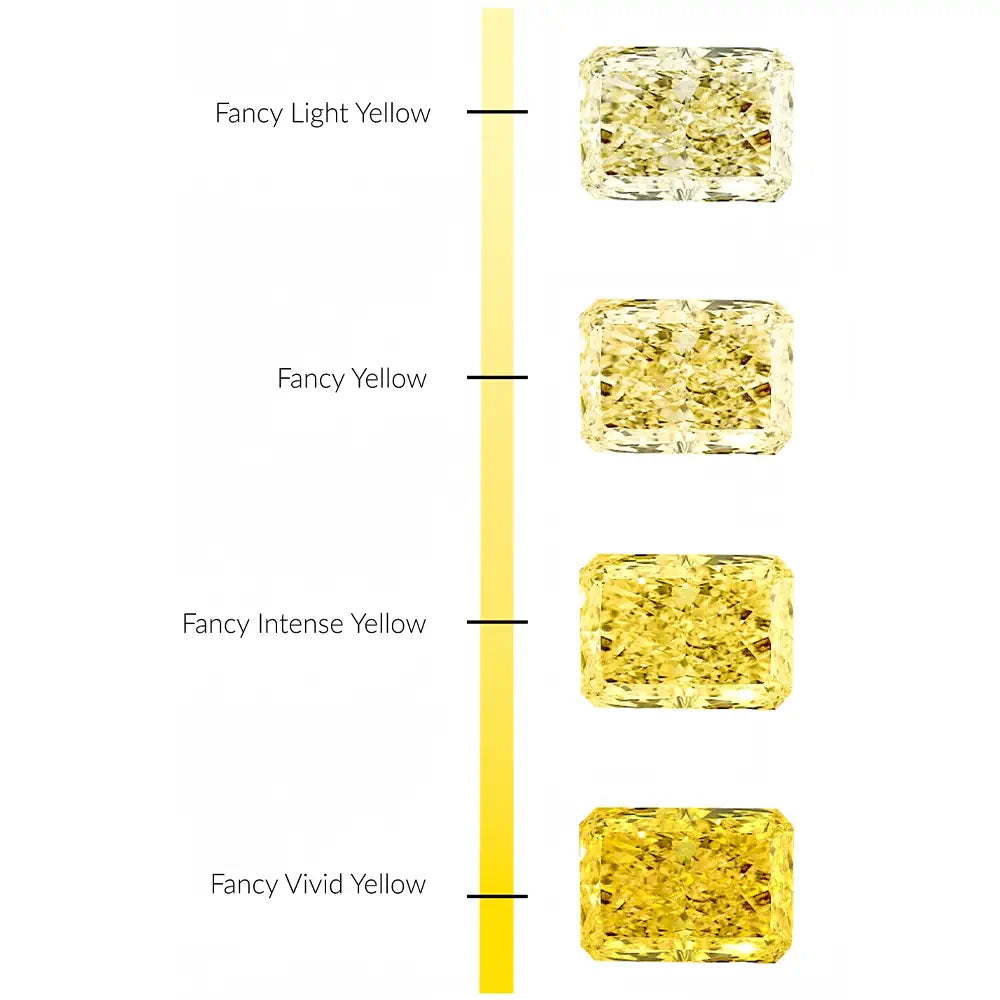
Yellow Diamond Grading
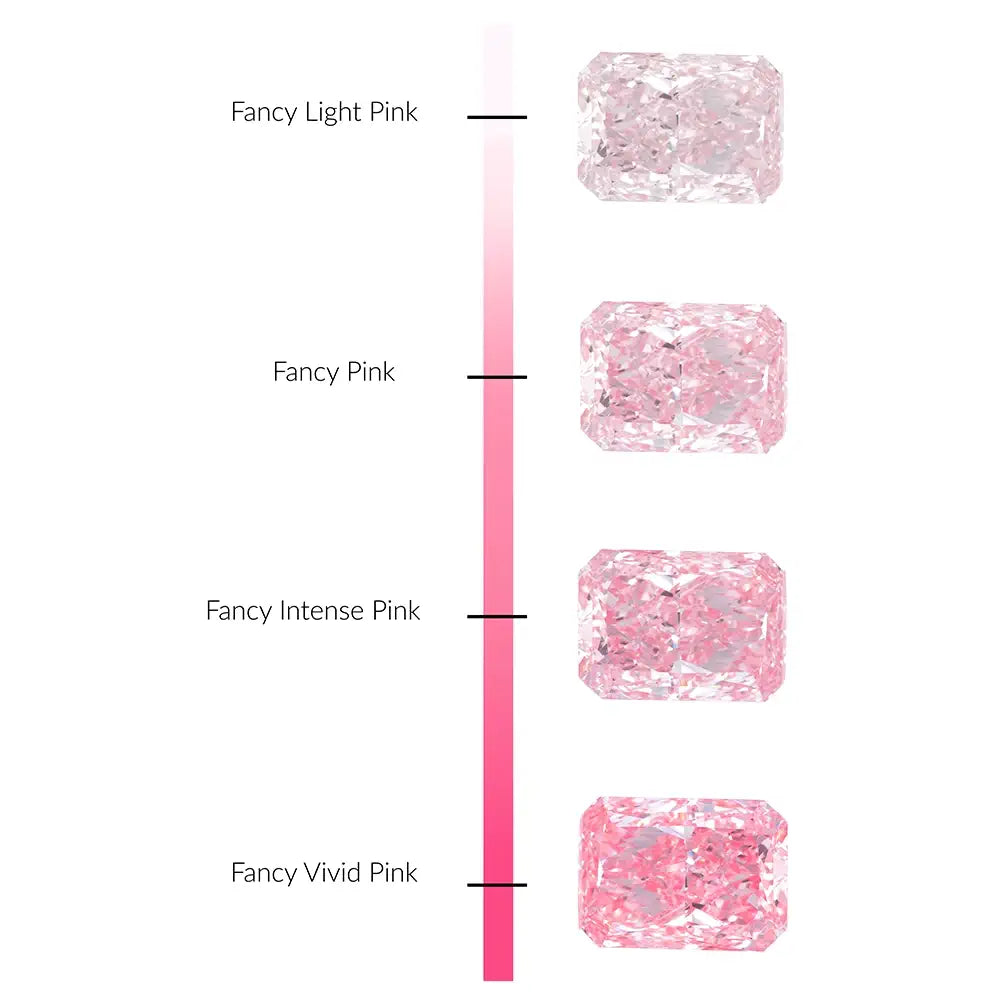
Pink Diamond Grading
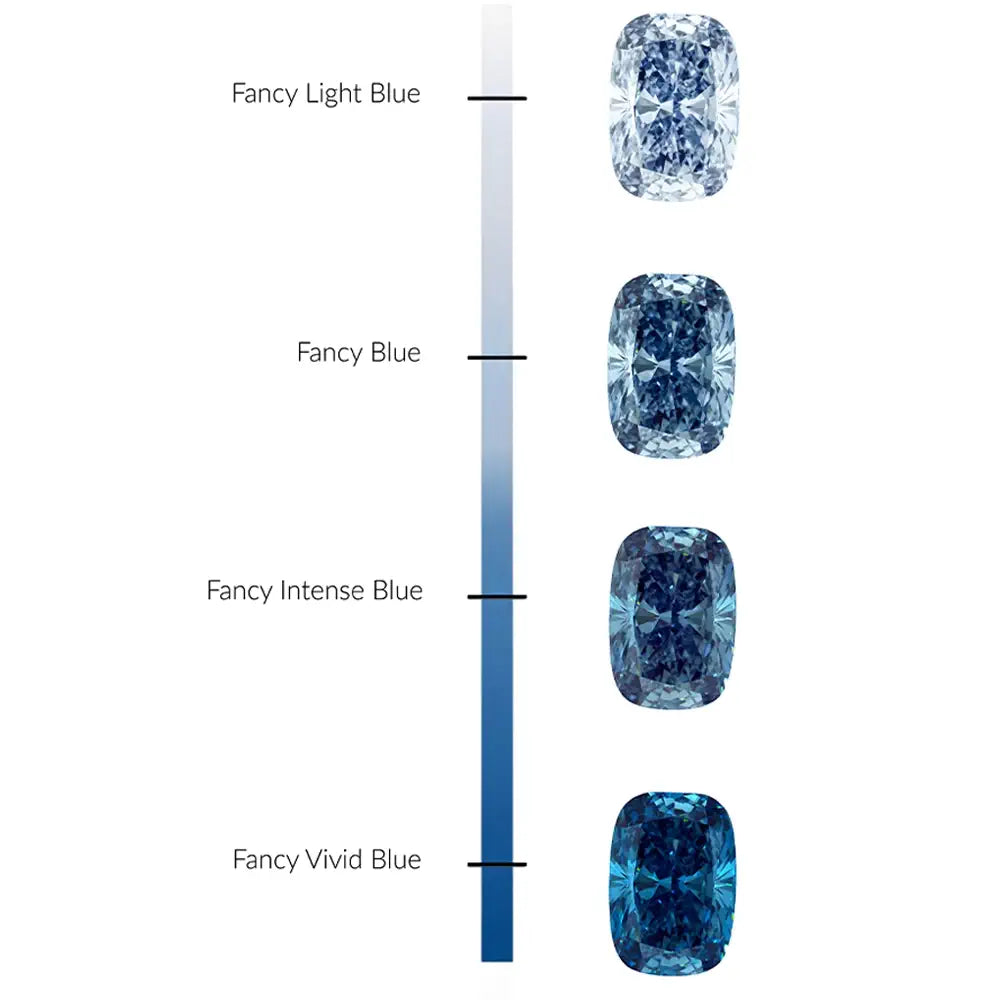
Blue Diamond Grading

Carat
Carat measures a lab diamond’s weight in metric carats, with one carat equal to 0.2 grams and subdivided into 100 points. Carat weight is the most objective of the 4Cs and provides a standardized measure of size while maintaining quality and proportions.

Clarity
Clarity measures the internal features, called inclusions, and external characteristics, called blemishes. Diamonds without inclusions or blemishes are extremely rare, and most imperfections are visible only under magnification. Lab-grown diamonds have the same clarity range as natural diamonds and often show fewer flaws due to precise, controlled growth conditions.
Clarity Scale (FL to I3)
- FL (Flawless) - Perfect, no visible inclusions or blemishes.
- IF (Internally Flawless) - No internal flaws, only tiny surface marks.
- VVS1 - VVS2 (Very Very Slightly Included) - Extremely hard to see inclusions under 10× magnification.
- VS1 - VS2 (Very Slightly Included) - Minor inclusions visible under magnification.
- SI1 - SI2 (Slightly Included) - Noticeable inclusions under magnification.
- I1 - I3 (Included) - Obvious inclusions that may affect sparkle or durability.
Lab-grown diamonds can achieve top clarity grades more consistently, making them visually exceptional while maintaining the same grading standards as natural diamonds.

Why Choose a Lab-Grown Diamond?
- Exceptional Quality: Crafted with precision, offering the same brilliance, fire, and durability as natural diamonds. Each stone is carefully engineered to meet the highest standards of craftsmanship.
- Better Value for Money: More accessible pricing without compromising on size, color, or clarity. This allows you to select a larger or higher-quality diamond for the same investment.
- A Responsible Choice: Produced sustainably with minimal environmental impact and free from conflict. Choosing a lab-grown diamond reflects a conscious, ethical approach to luxury.
- Full Traceability: Transparent origin from creation to setting, ensuring confidence and trust. Every stone comes with certified documentation verifying its quality and provenance.
Lab-Grown Diamond Certifications: IGI & GIA
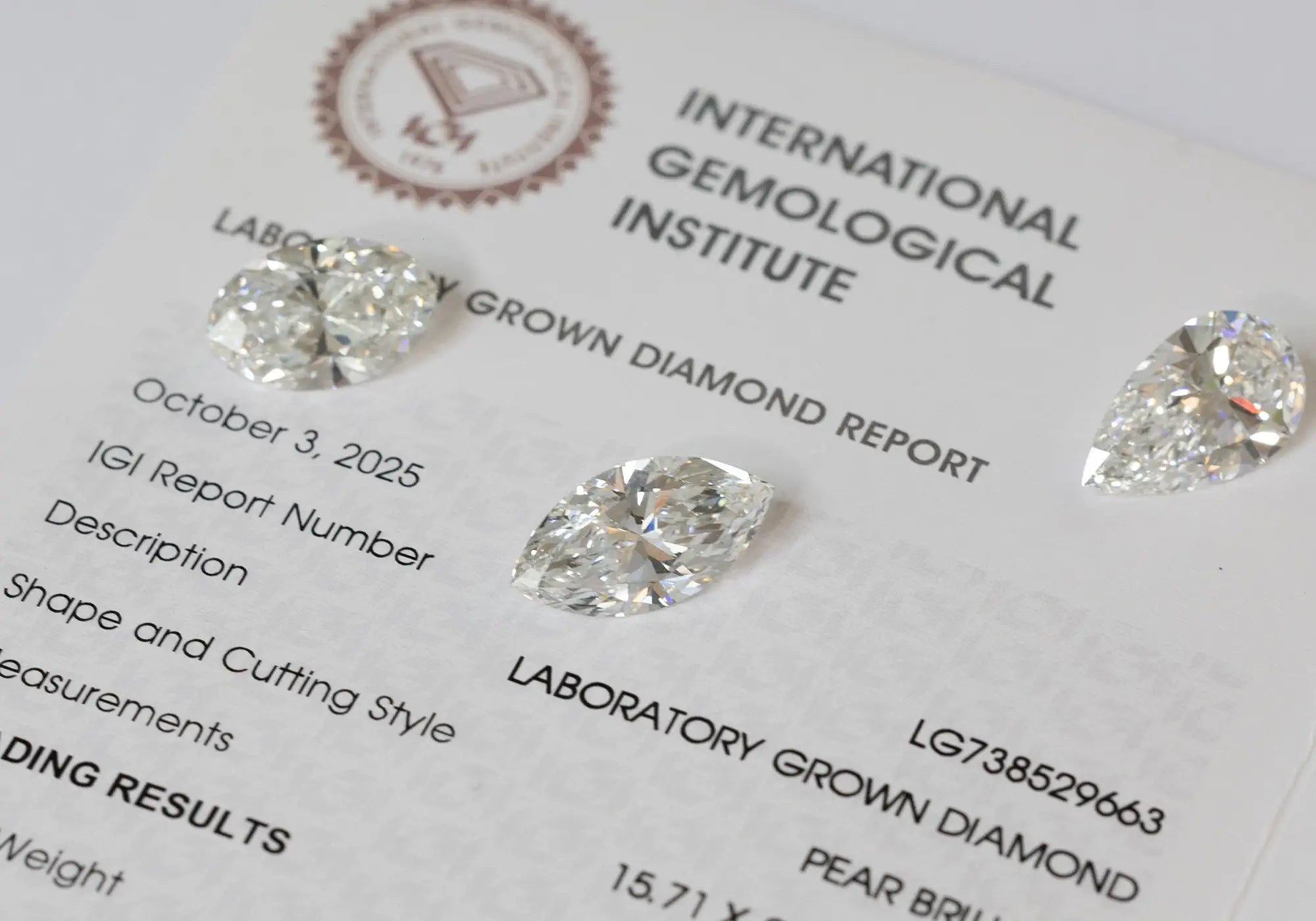
Diamond certification is an independent verification of a diamond’s quality, authenticity, and characteristics. Renowned organizations such as IGI (International Gemological Institute) and GIA (Gemological Institute of America) evaluate diamonds based on the 4Cs: Carat, Cut, Color, and Clarity. This ensures that each diamond is graded accurately and consistently.
Certification gives buyers confidence in the diamond’s quality and value. For lab-grown diamonds, it also confirms that the stone was created in a controlled laboratory environment and meets the same standards of brilliance, durability, and craftsmanship as a natural diamond.

Same Brilliance, A New Vision of Luxury
Lab-grown diamonds embody a modern vision of fine jewelry, delivering the same brilliance, strength, and lasting beauty as natural diamonds, while embracing a responsible and forward-thinking approach to luxury.
Need help?
Frequently Asked Questions
Lab-Grown Diamond
Lab-grown diamonds are real diamonds, identical in chemical, physical, and optical properties to natural diamonds.
Yes. Lab-grown diamonds are pure carbon, with the same crystal structure and durability as mined diamonds.
No it’s not possible.
Only very specialized laboratory machines can tell the difference. Even a trained gemologist cannot distinguish them by eye.
Yes. It shines just like a natural diamond and lasts forever.
Lab-grown diamonds cost less because they are created in weeks rather than over billions of years, reducing rarity while offering the same beauty and quality.
No. Lab-grown diamonds look identical to natural diamonds to anyone without tools.
Certification
Yes. Lab-grown diamonds are certified by independent laboratory, just like natural diamonds.
Yes. Every lab-grown diamond comes with a grading certificate IGI or GIA detailing its 4Cs and quality.
Absolutely. Both IGI and GIA are globally recognized and trusted authorities in diamond grading.
Yes. Lab-grown diamond certificates follow the same international standards as natural diamonds.
The grading system is the same, but the certificate clearly notes that the diamond is lab-grown.
Quality
Lab-grown diamonds can reach the same clarity and color as natural diamonds.
The difference lies in the process, not the quality. Grown in a fully controlled environment, lab-grown diamonds make it faster and more predictable to achieve specific grades but the final result is identical to a natural diamond.
Yes. Lab-grown diamonds are graded using the same globally recognized 4Cs standards as natural diamonds.