
 White Lab Diamond Rings
 Blue Lab Diamond Rings
 Pink Lab Diamond Rings
 Yellow Lab Diamond Rings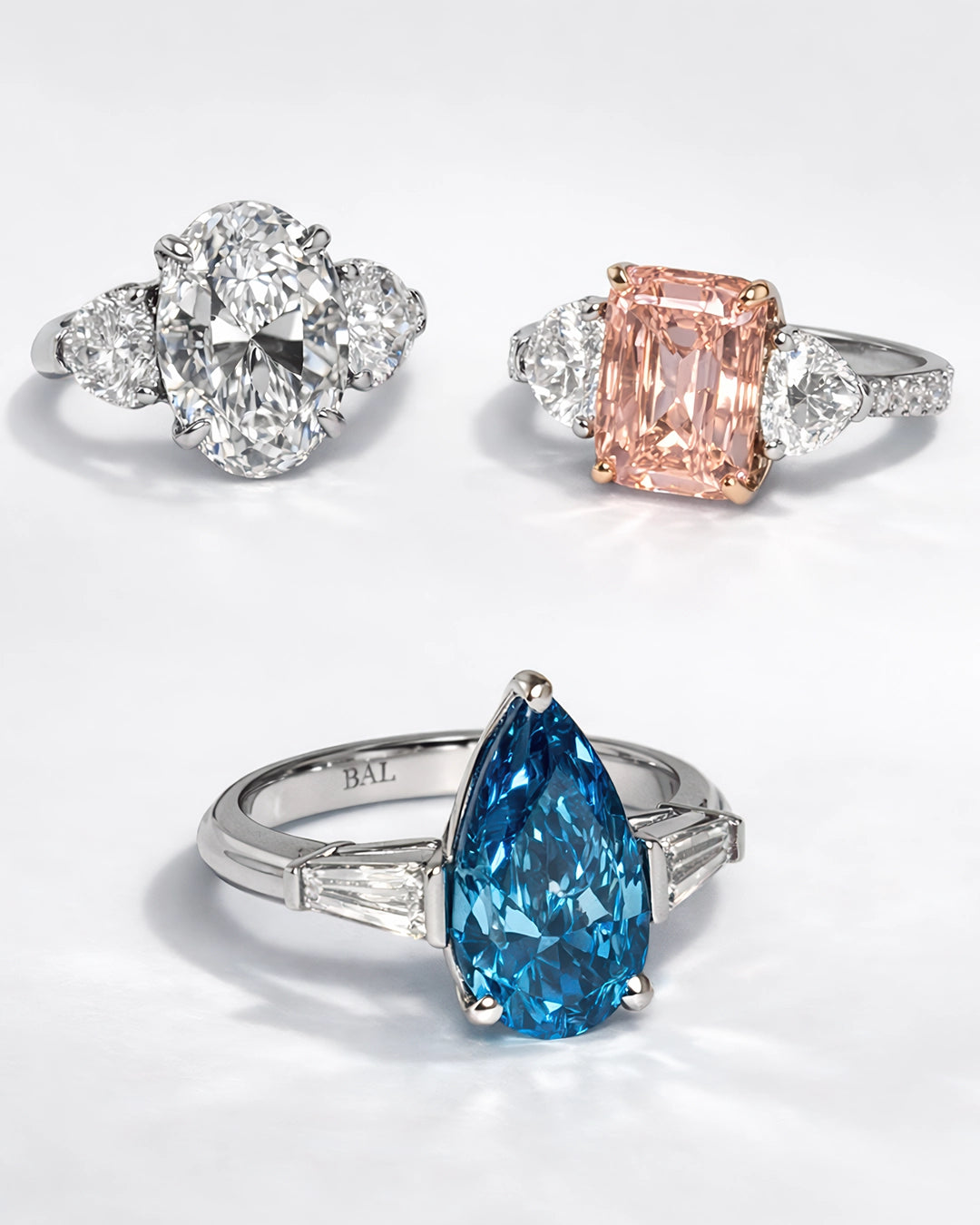

 Round Lab Diamond Engagement Rings
 Oval Lab Diamond Engagement Rings
 Pear Lab Diamond Engagement Rings
 Cushion Lab Diamond Engagement Rings
 Emerald Lab Diamond Engagement Rings
 Radiant Lab Diamond Engagement Rings
 Heart Lab Diamond Engagement Rings
 Marquise Lab Diamond Engagement Rings
 What are Lab-Grown Diamonds ?
 Lab-Grown vs. Natural Diamonds
 CVD vs. HPHT
 What are the 4Cs?
 How to read a diamond certificate ?
 Fancy Color Grading
 Ring Sizes
 Pendant Lengths
 Bracelet Sizes
 Metals Guide: 14k or 18k Gold?
14k vs 18k Gold: The Ultimate Jewelry Metal Guide
When choosing fine jewelry, the gold alloy matters just as much as the design or diamond.
The difference between 14k and 18k gold affects not only color and feel but also price, durability, and overall luxury.
At BÄL DIAMONDS, we offer both 14k and 18k options in yellow, white, and rose gold. Each chosen for its ideal balance between beauty and performance.
Here’s how to choose the one that fits your lifestyle and style.
What Does “Karat” Mean in Gold?
“Karat” (not to be confused with diamond carat) measures the purity of gold how much pure gold is mixed with alloy metals like silver, copper, or palladium.
|
GOLD TYPE |
% PURE GOLD |
ALLOY METALS |
CHARACTERISTICS |
|
24k |
99.9% |
None |
Too soft for jewelry |
|
18k |
75% |
25% alloy |
Rich color, luxurious feel |
|
14k |
58.3% |
41.7% alloy |
Stronger, more durable |
|
10k |
41.7% |
58.3% alloy |
Common in mass-market jewelry |
14k Gold:
Strength and Everyday Wear
14k gold contains 58.3% pure gold and 41.7% alloy metals, making it more resistant to scratches and bending.
Pros:
-
Strong and ideal for daily wear
-
More affordable than 18k
-
Slightly lighter in color
-
Low maintenance
Cons:
-
Slightly less rich tone
-
May show a cooler hue (especially in yellow gold)
18k Gold:
Richness and Prestige
18k gold is 75% pure gold, giving it a deeper color and more luxurious look.
It’s the choice for those who value warmth, refinement, and authenticity.
Pros:
-
Deeper, richer hue
-
More hypoallergenic (less alloy metal)
-
Feels heavier and more luxurious
-
Preferred for fine European jewelry
Cons:
-
Softer, more prone to small scratches
-
Slightly higher price
14k vs 18k Gold:
Side-by-Side Comparison
|
FEATURE |
14k GOLD |
18k GOLD |
|
PURITY |
58.3% |
75% |
|
COLOR TONE |
Lighter |
Richer |
|
DURABILITY |
Very strong |
Softer |
|
ALLERGY RESISTANCE |
Good |
Excellent |
|
MAINTENANCE |
Easy |
Occasional polish |
|
PRICE |
More affordable |
More expensive |
|
IDEAL FOR |
Everyday wear |
Luxury pieces |
Rhodium Plating on White Gold
White gold is naturally a pale gray-gold color. To achieve its crisp silver look, it’s plated with rhodium, a rare metal that adds shine and protection.
Replating every 1–2 years keeps it bright.
Need help?
Frequently Asked Questions
14k gold is harder and more durable for everyday use; 18k is richer and softer, better for special pieces.
Yes, the higher gold content gives 18k a deeper, warmer hue.
Pure gold doesn’t tarnish, but alloy metals can dull slightly over time — regular polishing restores shine.
18k, because it contains fewer alloy metals.
Absolutely — mixing karats and colors creates modern, elegant contrasts.
Continue Learning
- Choose Your Diamond Shape
- Popular Setting Styles
- Design Trends & Inspiration
- Jewelry Cleaning & Care