
 White Lab Diamond Rings
 Blue Lab Diamond Rings
 Pink Lab Diamond Rings
 Yellow Lab Diamond Rings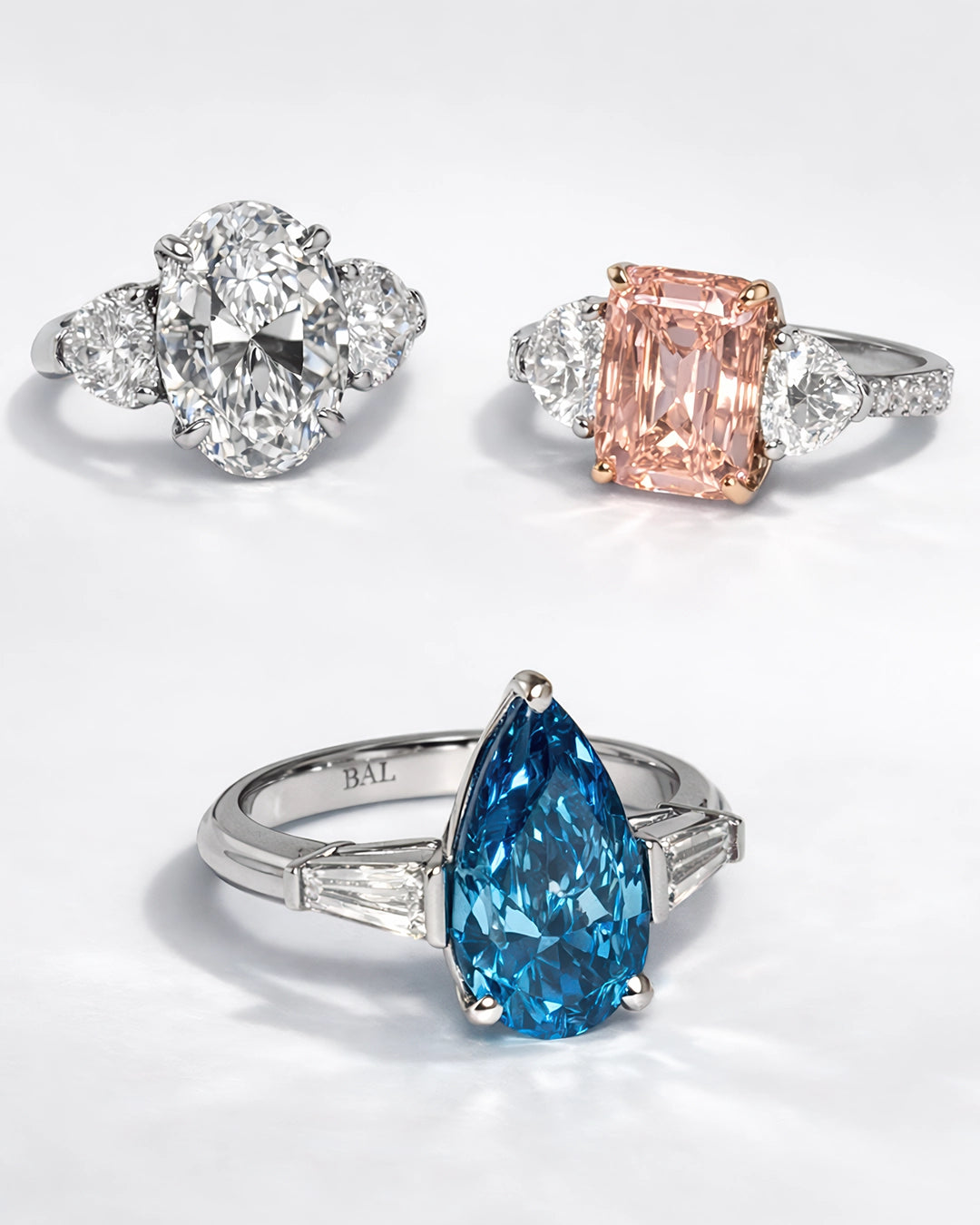

 Round Lab Diamond Engagement Rings
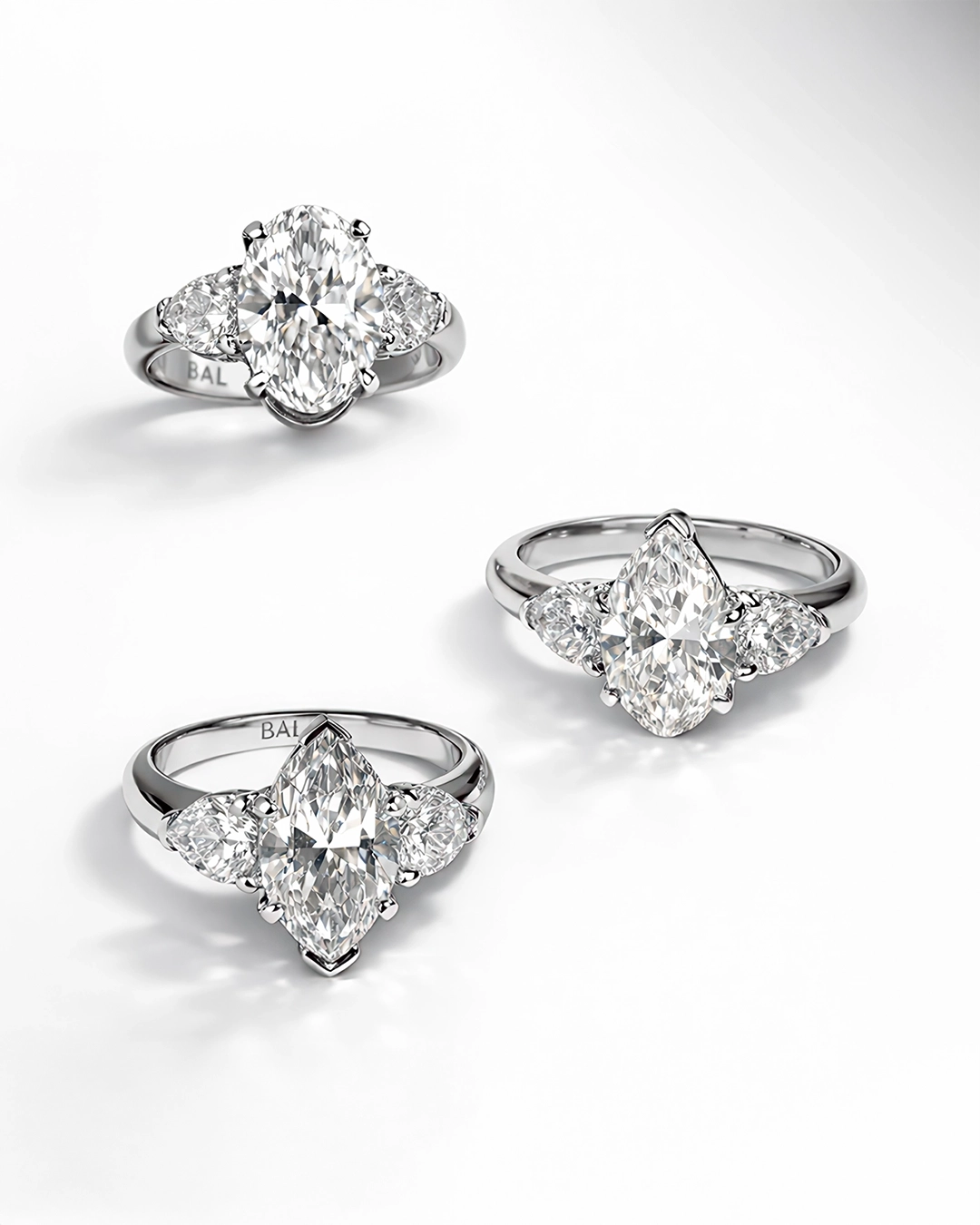
 Oval Lab Diamond Engagement Rings
 Pear Lab Diamond Engagement Rings
 Cushion Lab Diamond Engagement Rings
 Emerald Lab Diamond Engagement Rings
 Radiant Lab Diamond Engagement Rings
 Heart Lab Diamond Engagement Rings
 Marquise Lab Diamond Engagement Rings
 What are Lab-Grown Diamonds ?
 Lab-Grown vs. Natural Diamonds
 CVD vs. HPHT
 What are the 4Cs?
 How to read a diamond certificate ?
 Fancy Color Grading
 Ring Sizes
 Pendant Lengths
 Bracelet Sizes
 Metals Guide: 14k or 18k Gold?
How Lab-Grown Diamonds Are Made: CVD vs HPHT Explained
Lab-grown diamonds aren’t synthetic, they’re real diamonds created through advanced science that replicates the natural process of diamond formation.
At BÄL DIAMONDS, we work only with laboratories that meet the highest ethical and technological standards.
Let’s explore exactly how lab-grown diamonds come to life.

From a Tiny Seed to a Diamond
Every lab-grown diamond begins with a diamond seed, a minuscule slice of pure carbon from an existing diamond.
This seed is placed in a specialized growth chamber that recreates the extreme heat and pressure found deep within the earth’s mantle.
Over several weeks, carbon atoms bond layer by layer around the seed, forming a full diamond crystal.
Once grown, the diamond is cut, polished, and certified, just like a mined stone.
Learn more: What Are Lab-Grown Diamonds?
The Two Main Growth Methods
There are two main technologies used to create lab-grown diamonds: HPHT and CVD.
Both produce real diamonds, the difference lies in how they replicate nature.
HPHT: High Pressure High Temperature
HPHT is the original diamond-growing method.
It mimics the natural conditions of the earth’s mantle by applying extreme pressure (1.5 million psi) and temperature (over 1,500°C) to pure carbon.
- The carbon melts under pressure and crystallizes around the diamond seed.
- The process can produce both colorless and fancy-colored diamonds (like yellow and blue).
- HPHT stones sometimes show subtle metallic inclusions under magnification a signature of their origin.
Did you know? Many natural diamonds are also undergoing HPHT treatment to enhance their color.
CVD: Chemical Vapor Deposition
CVD is the newer, cleaner, and more advanced process.
It uses a plasma reactor filled with carbon-rich gases (like methane) and energy to break down molecules into carbon atoms.
These atoms settle onto the diamond seed, bonding and growing one atomic layer at a time.
The process is slower but offers incredible control over clarity and color.
- CVD diamonds often show fewer inclusions and excellent transparency.
- It allows for larger stone growth with consistent quality.
- Nearly all BÄL DIAMONDS stones are produced with CVD technology for superior purity.
Explore next: The 4Cs of Lab-Grown Diamonds

The Finishing Process
Once a diamond is grown whether by CVD or HPHT it undergoes the same finishing journey as a mined diamond:
- Cutting: Skilled artisans use laser precision to cut facets that maximize brilliance.
- Polishing: The surface is polished to achieve perfect light reflection.
- Grading: Each stone is sent to a gemological laboratory (IGI or GIA) for independent certification.
- Inscription: The certificate number is laser-engraved on the girdle for traceability.
Learn more: How to Read a Diamond Certificate
CVD vs HPHT: Side-by-Side Comparison
|
ATTRIBUTE |
CVD |
HPHT |
|
TECHNOLOGY |
Carbon plasma growth |
High-pressure melting |
|
CLARITY |
Higher clarity, fewer inclusions |
May contain metallic inclusions |
|
COLOR CONTROL |
Excellent colorless results |
Naturally warmer tones |
|
EFFICIENCY |
Slower, precise growth |
Faster, higher temperature |
|
|
Ideal for larger stones |
Ideal for smaller or colored stones |
At BÄL DIAMONDS, we favor CVD-grown stones for their superior clarity and control, but also work with select HPHT producers for exceptional fancy colors.

The Role of Certification
After growth and finishing, every diamond is independently graded and certified by IGI or GIA.
This certification confirms the diamond’s 4Cs, growth method (CVD or HPHT), and overall quality guaranteeing full transparency for the customer.

Sustainability Benefits
Lab-grown diamonds consume less energy, avoid environmental disruption, and eliminate unethical mining practices.
When powered by renewable energy, the carbon footprint can be up to 80% lower than that of a mined diamond.
At BÄL Diamonds, sustainability isn’t a marketing claim it’s part of our production model.
Learn more: Environmental Impact: Lab-Grown vs Mined

Why This Process Matters
Understanding how lab-grown diamonds are made helps you appreciate the artistry behind each piece.
From carbon atoms to certified brilliance, every BÄL diamond represents the meeting of science, craftsmanship, and ethics.
Need help?
Frequently Asked Questions
Both are real diamonds. CVD uses carbon-rich gas to grow diamonds atom by atom, while HPHT applies pressure and heat to crystallize carbon.
CVD diamonds often have higher clarity and color consistency, but HPHT can produce beautiful fancy-colored stones.
Between 2 and 6 weeks, depending on size and technology.
No. Both are certified by IGI or GIA using the same grading standards.