 White Lab Diamond Rings
 Blue Lab Diamond Rings
 Pink Lab Diamond Rings
 Yellow Lab Diamond Rings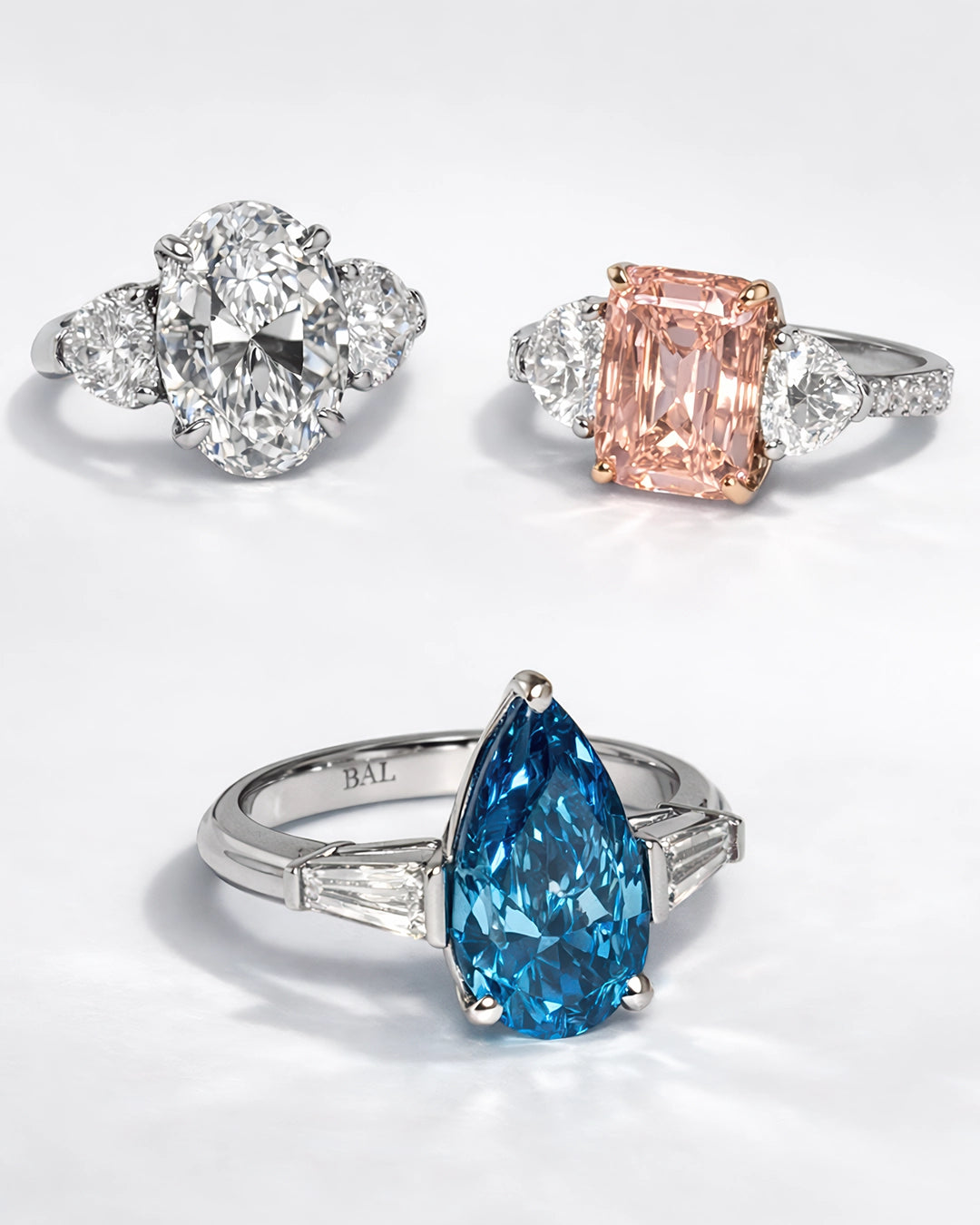

 Round Lab Diamond Engagement Rings
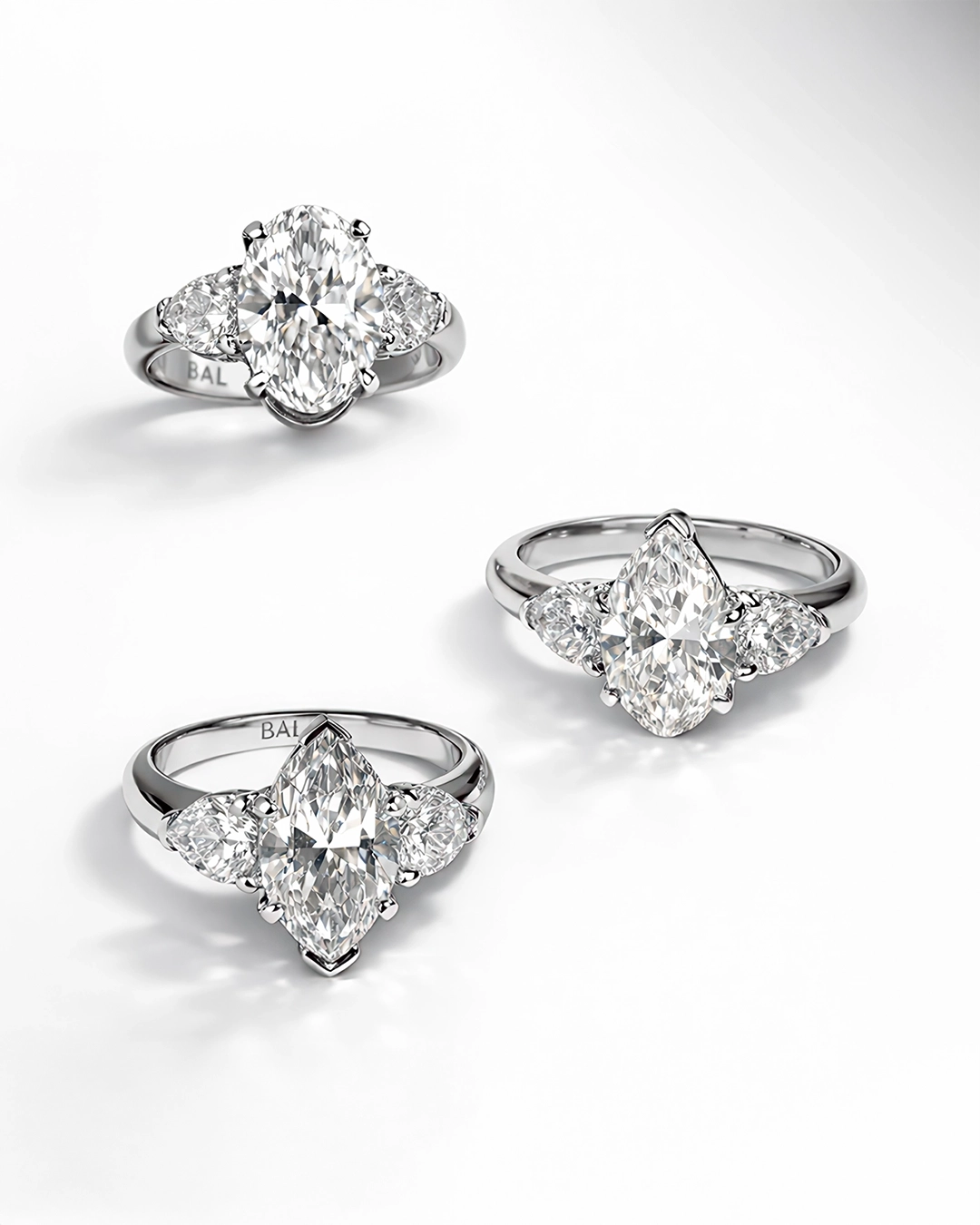
 Oval Lab Diamond Engagement Rings
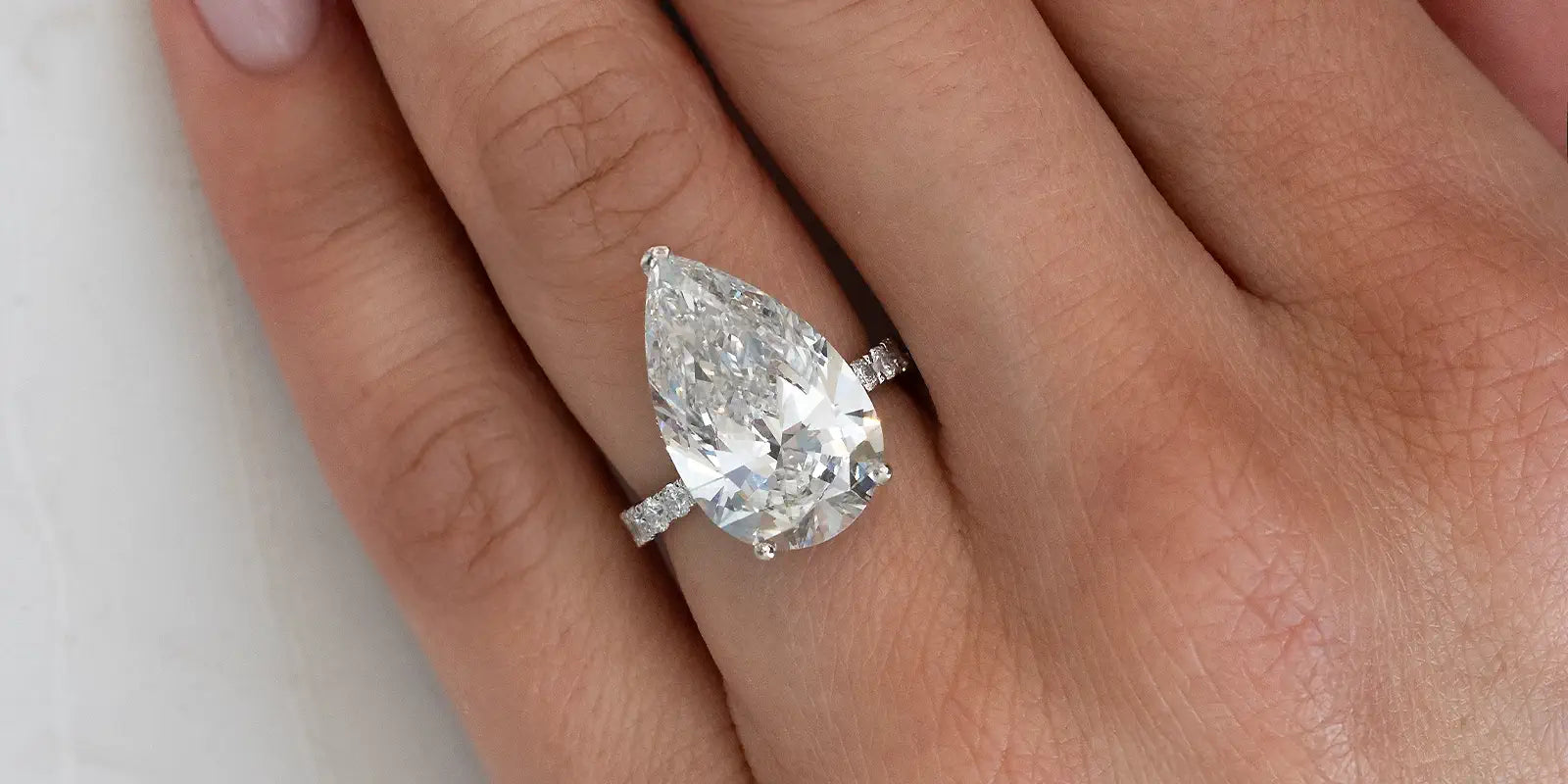
 Pear Lab Diamond Engagement Rings
 Cushion Lab Diamond Engagement Rings
 Emerald Lab Diamond Engagement Rings
 Radiant Lab Diamond Engagement Rings
 Heart Lab Diamond Engagement Rings
 Marquise Lab Diamond Engagement Rings
 What are Lab-Grown Diamonds ?
 Lab-Grown vs. Natural Diamonds
 CVD vs. HPHT
 What are the 4Cs?
 How to read a diamond certificate ?
 Fancy Color Grading
 Ring Sizes
 Pendant Lengths
 Bracelet Sizes
 Metals Guide: 14k or 18k Gold?
Lab-Grown Diamond Drop Earrings: The Complete Guide
Lab Diamond drop earrings are one of the most expressive categories in fine jewelry. Unlike a stud, which presents a single stone face-on, or a hoop, which frames the ear, a drop earring moves. It catches light differently at every angle, responds to the body, and creates a presence that no fixed piece can replicate.
Choosing the right pair, however, requires understanding a few things that most brands do not explain clearly. This guide covers all of it.
What Makes a Drop Earring Different
A drop earring suspends one or more stones below the lobe, held in place by a post and finding at the top. The defining quality is movement. When a drop earring is constructed correctly, the stones swing freely with natural motion, and that movement is precisely what generates the light performance that makes the format so compelling.
The length, the stone count, the shape of the diamonds, the way they are linked together: each of these decisions shapes how the earring moves, how much light it returns, and how it reads on the face. Get the proportions right and a drop earring is one of the most striking pieces in fine jewelry. Get them wrong and it can look heavy, unbalanced, or visually disconnected from the ear.
Drop Length: Proportions Over Measurements
Unlike hoop earrings, where diameter is a fixed and meaningful number, drop earring length is not something we define in millimeters. It is a result. The length emerges from the stone sizes, shapes, and the number of elements in the piece, and it varies significantly from one design to the next.
What matters is visual balance, specifically the relationship between the top element and what hangs below it.
For two or three stone drops, we work with a minimum top stone of approximately 1 ct. This is not an arbitrary threshold. It is the point at which the upper stone has enough visual weight to anchor the piece on the ear and create a credible transition to the element below. A top stone that is too small makes the lower stone look like it is floating without context. The proportions become uncomfortable and the overall impression suffers.
By their nature, drop earrings are more exclusive pieces than studs or hoops. They require larger stones to achieve optimal visual balance, and the total carat weight climbs quickly across two or three elements. This is worth understanding before making a selection, and it is something our diamantaires discuss with every client.
As a general reference: a two-stone drop with a 1 ct top and a 2 ct bottom sits just below the lobe and reads as a refined, wearable piece for both day and evening. Increase the stone sizes and the earring lengthens and becomes more of an occasion piece. The graduation is natural and the decision depends entirely on how and where you intend to wear it.
Construction Styles
How a drop earring is built is just as important as what stones go into it. The construction determines how the piece moves, how it sits on the ear, and ultimately how much life it has in wear.

Articulated: The Maillon Link
The most sophisticated construction for a two or three stone drop is the articulated link. Each stone element is set independently and connected to the next by a small gold maillon, a precise connecting loop that allows the lower stone to swing freely in any direction.
The effect is immediate in wear. As the wearer moves, the lower stone responds, catching light from continuously changing angles. The piece is alive in a way that a fixed construction simply cannot be. The maillon itself is a small, precise component. At BÄL, it is calibrated to allow natural movement without creating looseness or visual instability. The stones move with the wearer rather than swinging independently.
This is the construction we prioritize at BÄL for multi-stone drops. The articulation is not decorative. It is functional, and it is what separates a drop earring that performs from one that merely hangs.

Fixed Bar Construction
Some drop earrings use a small gold bar between the stones rather than a maillon link. The bar keeps the elements in a fixed relationship, preventing independent movement. The result is cleaner and more controlled in appearance, and some clients prefer this for a more structured look.
It is a valid construction. It simply does not deliver the same light performance as an articulated piece. A fixed drop reads more like a long stud than a true drop earring. We offer both, but our preference and our recommendation for clients who want to understand what the format can do is the articulated version.

Tennis Drops
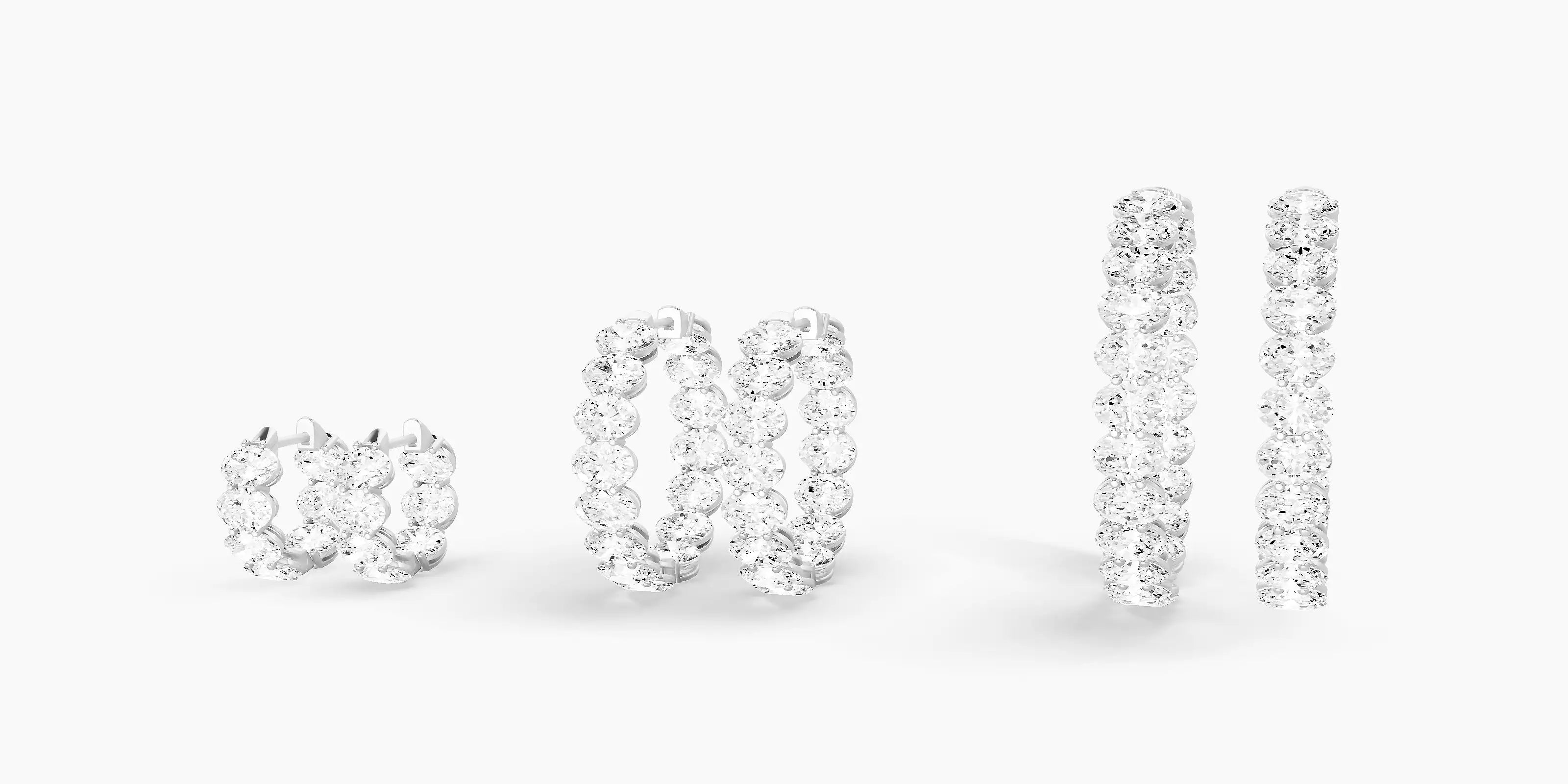
A tennis drop earring is a vertical line of diamonds set in sequence, descending from the post in a single continuous row. The stones are typically the same shape throughout, prong-set or bezel-set, and the format creates a clean, unbroken line of light from the lobe downward.
We currently offer tennis drops in uniform stone size. The consistent sizing creates a graphic, precise effect. The linear format works particularly well with marquise, oval, and round brilliant stones, each creating a distinct silhouette. Tennis drops are among the most wearable drop formats for daily use at shorter lengths. As the stone count increases, they become stronger occasion pieces.
Shop our Lab Diamond Drop Earrings ➤
Lab Diamond Shapes in Drop Earrings
The shape of the diamond determines the character of the drop. Each cut behaves differently in a suspended setting, and the choice has a significant effect on the overall look.

Pear
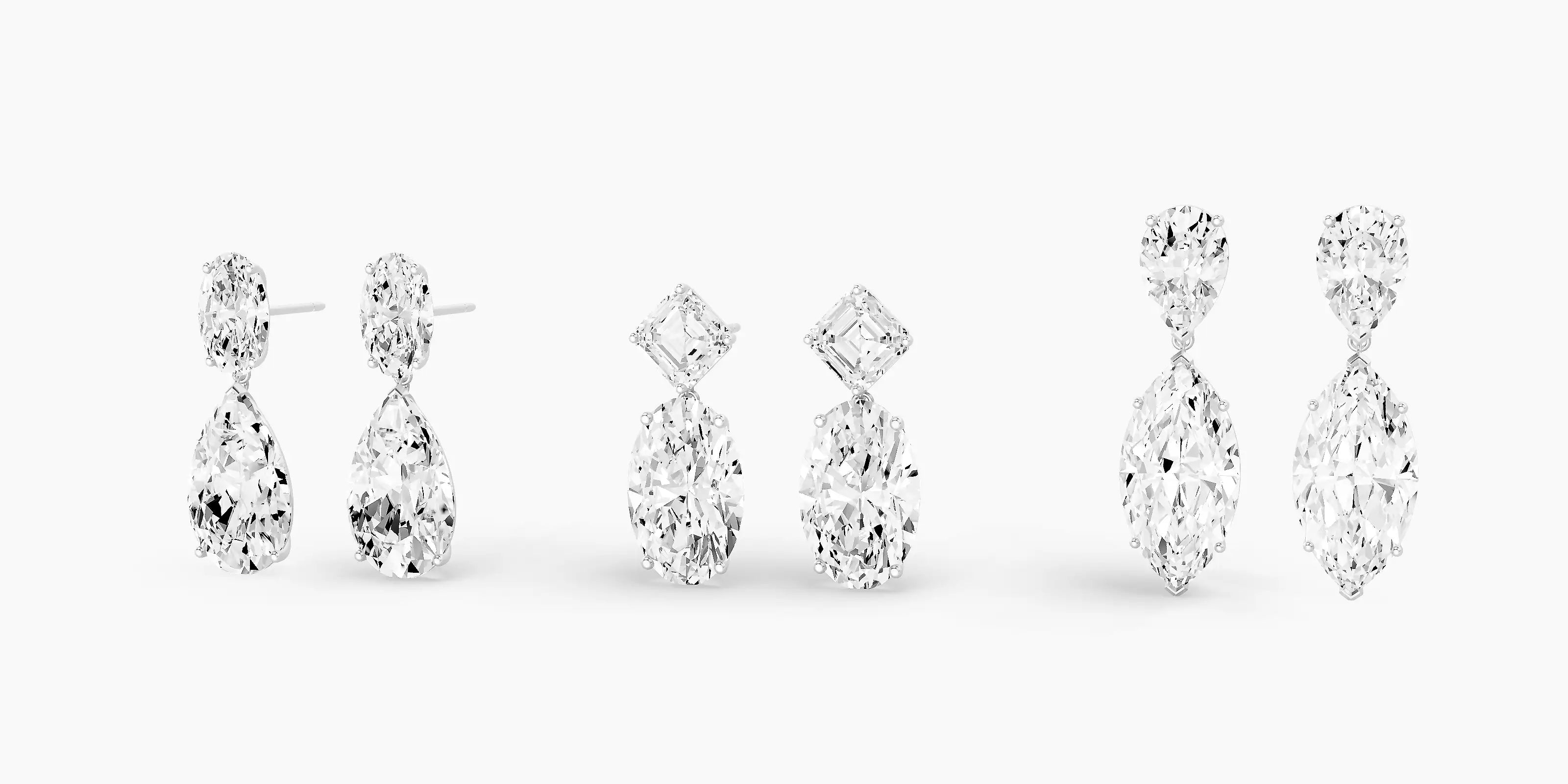
The pear is the natural shape for a drop earring. Its tapered point at the top and rounded base create an inherently directional silhouette that echoes the movement of the piece itself. Set with the point upward, a pear diamond creates a clean, elongating line on the face. It is one of the most flattering shapes for this format, particularly for two-stone drops where the lower stone is larger than the upper.
Pear diamonds read differently depending on their proportions. A longer, narrower pear creates a more elongated, fashion-forward look. A shorter, rounder pear reads fuller and softer. Our diamantaires select for both cut quality and proportion, since pears vary considerably in shape even within the same carat weight.

Oval
The oval is a versatile shape in a drop context. Its elongated form works with the downward movement of the earring, and its brilliant faceting delivers strong light performance. In a two-stone articulated drop, two ovals linked by a maillon create a fluid, continuous line with excellent visual balance. In a tennis format, ovals set vertically create a longer, more graphic line.

Marquise
The marquise has two pointed ends, which makes it one of the most directional shapes available. In a drop earring set vertically, it creates a particularly elongated silhouette. In a tennis format, marquise stones set at a slight diagonal create a dynamic, cascading effect. It is a more distinctive choice than a round or oval, with strong fashion credibility.

Round Brilliant
The round brilliant maximizes fire and brilliance above all other cuts. In a tennis drop with multiple rounds in sequence, the result is a continuous line of intense, undifferentiated sparkle. It is the most classic choice in the format and also the most light-efficient. For clients who want maximum brilliance in a drop format without a strong shape statement, the round is the answer.


Emerald and Radiant
Step-cut stones like the emerald bring a composed, architectural quality to a drop earring. The long rectangular table and cropped corners create clear, open windows of light rather than the fractured brilliance of a brilliant cut. In a two-stone drop, an emerald over an emerald creates a striking, graphic piece. The radiant brings the same rectangular outline with added brilliance, for clients who want structure and sparkle in equal measure.
Closure Systems: What Holds It All in Place
The closure on a drop earring matters more than on a stud. The piece is heavier, longer, and subject to more movement. The wrong closure affects both security and how the earring sits on the ear.

BÄL Disc-Latch (Standard on All BÄL Drop Earrings)
BÄL drop earrings use a disc-latch closure as standard. A solid 18k gold disc sits flat against the back of the ear, providing a wide contact surface that distributes the weight of the piece evenly across the lobe. Fitted to this disc is a precision latch mechanism: the post passes through and locks into the latch, which clicks firmly shut and requires a deliberate press to release.
The disc is not a comfort accessory. It is a structural component. For a drop earring carrying two or more substantial stones, the width of the disc prevents the piece from tilting forward or rotating on the post. The stone faces the viewer correctly. The drop hangs at the right angle. The earring performs as it was designed to.
A drop earring that tilts is a drop earring that does not perform. The diamond no longer faces forward, the proportions read incorrectly on the face, and the light return drops significantly. The disc-latch eliminates this entirely. It is the only closure we recommend for drop earrings of any significant weight.

Butterfly (Push-Back)
Two spring-loaded wings grip the post. Simple, lightweight, and widely used across the industry. The butterfly works well for lighter, shorter drops where weight is not a significant factor. For heavier multi-stone pieces it is less reliable, as the spring tension can loosen over time. Available on request at BÄL for clients who have a strong preference.

Guardian (Reinforced Push-Back)
A more structured version of the butterfly with a firmer grip mechanism and greater resistance to accidental loosening. A step up from the standard push-back in both security and feel. Available on request for clients who prefer a push-back system over a disc-latch.
At BÄL, all drop earrings are fitted with the disc-latch as standard. Clients who prefer an alternative closure can discuss this as part of the made-to-order process.
Metal: Why 18k Gold
All BÄL pieces are made in 18k gold, nickel-free and hypoallergenic. This is not a default. It is a decision made for structural, aesthetic and wear-comfort reasons.
18k gold is 75% pure gold, harder and more durable than 24k or 22k gold, which are too soft for fine jewelry in daily wear. It is also more resistant to wear and color change than lower karat alloys. For a drop earring, where the finding and link components are under repeated mechanical stress from movement and wear, the durability of 18k is particularly relevant.
The three gold colors each create a different relationship with a white diamond:

White gold is rhodium-plated and creates a cooler, more minimal palette. The gold recedes and the diamonds become the primary surface.
Shop our Lab Diamond White Gold Drop Earrings

Yellow gold draws warmth out of white stones. Rich, saturated contrast. Classic and directional.
Shop our Lab Diamond Yellow Gold Drop Earrings

Rose gold sits between warm and neutral. Flattering against most skin tones and particularly well suited to pear and oval shapes, where the warm metal complements the stone's natural softness.
All three are available made to order at BÄL.
Shop our Lab Diamond Rose Gold Drop Earrings
Lab-Grown Diamonds: The Same Stone, a Different Origin
Every stone in a BÄL drop earring is a lab-grown diamond. Not a simulant. Not a diamond alternative. A diamond, chemically, physically, and optically identical to a mined stone, produced in a controlled laboratory environment rather than extracted from the earth.
Lab-grown diamonds have the same crystal structure (carbon, cubic), the same hardness (10 on the Mohs scale), the same refractive index, and the same grading system. They cannot be distinguished from mined diamonds by sight, touch, or standard gemological testing.
For drop earrings, where total carat weight across two or three stones can reach 5 ct, 8 ct, or beyond, the practical advantage is significant. The same investment that would purchase a modest mined diamond drop can produce a considerably more generous lab-grown piece. For our clients, that typically means larger stones, better proportions, or both.
All BÄL stones are hand-selected by diamantaires for cut, proportions, color, clarity, fluorescence, and visual performance in natural light. For drop earrings specifically, the relationship between the stones matters as much as the quality of each individual stone. color matching and size calibration across the pair are part of the selection process.
Ready to Ship and Made to Order
Some BÄL drop earrings are available as ready-to-ship pieces: finished, quality-checked, and available for immediate purchase. These can be viewed in person at our private showroom at the Gold & Diamond Park in Dubai, or browse our website.
For clients who want a specific stone shape, size, gold color, or construction configuration, every piece in our collection is available made to order from our Dubai atelier. Drop earrings in particular benefit from the made-to-order process, since the relationship between the stones, their individual proportions, and the total visual balance of the piece are decisions that our diamantaires can guide precisely to your brief.
How to Choose the Right Pair
Start with the occasion. Will these be worn daily, for evening, or both? A two-stone articulated drop with a 1 ct top and a 2 ct bottom is a refined, versatile piece. Increase the stone sizes and it becomes a stronger occasion piece.
Choose your construction. Articulated maillon for movement and light performance. Fixed bar for a more controlled, structured look. Tennis format for a linear, multi-stone drop with continuous sparkle.
Decide on shape. Pear for an inherently directional, elongating silhouette. Oval for versatility and brilliance. Marquise for a fashion-forward, directional line. Round for maximum fire and a classic look. Emerald or radiant for a more architectural, composed result.
Choose your gold color. White, yellow, or rose gold? Consider your skin tone and how the earring relates to the other pieces you wear.
Let us select the stones. Proportion, color matching, and calibration across the pair are handled by our diamantaires. Every made-to-order piece is selected by hand in our Dubai atelier.