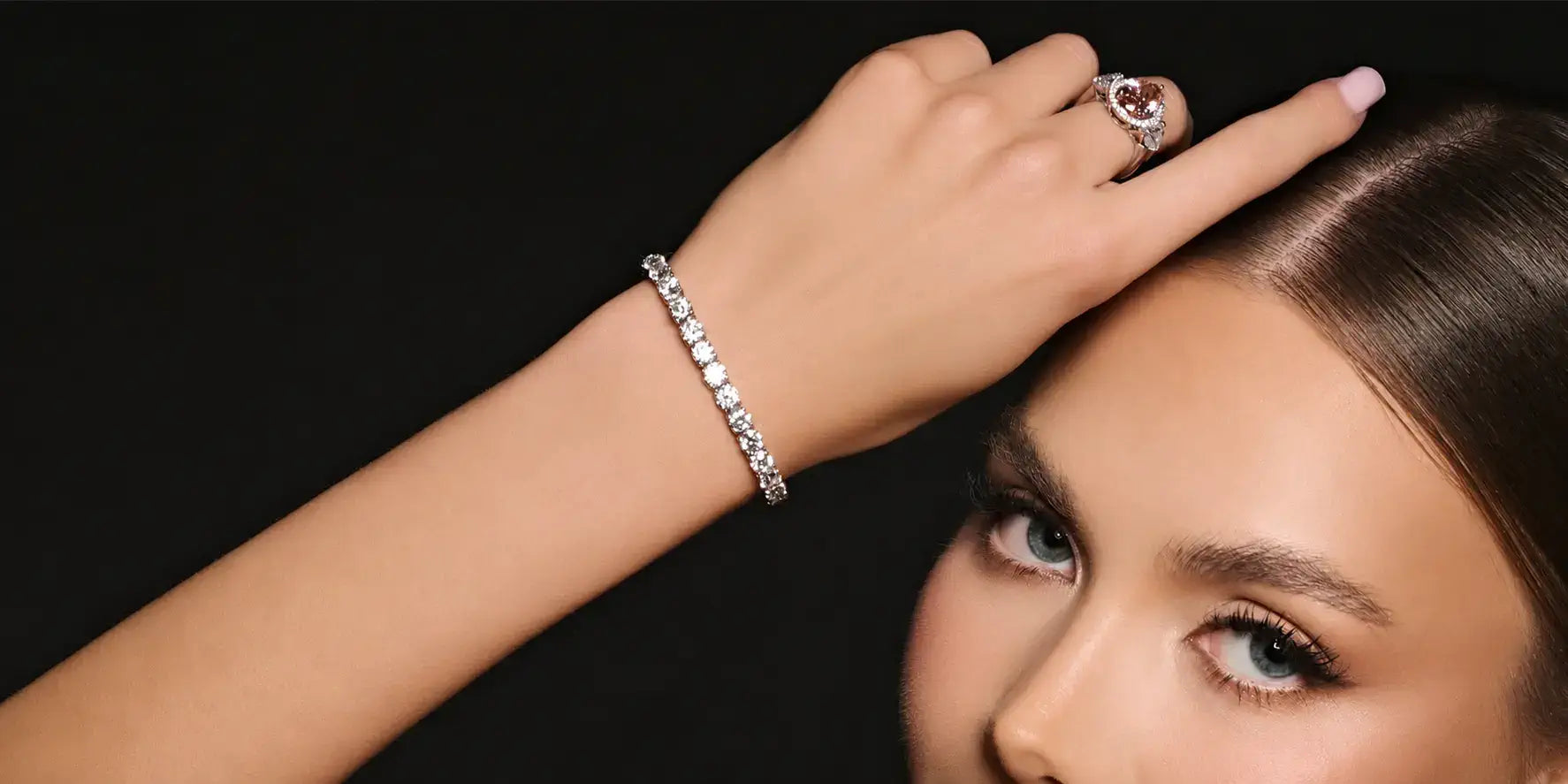
 White Lab Diamond Rings
 Blue Lab Diamond Rings
 Pink Lab Diamond Rings
 Yellow Lab Diamond Rings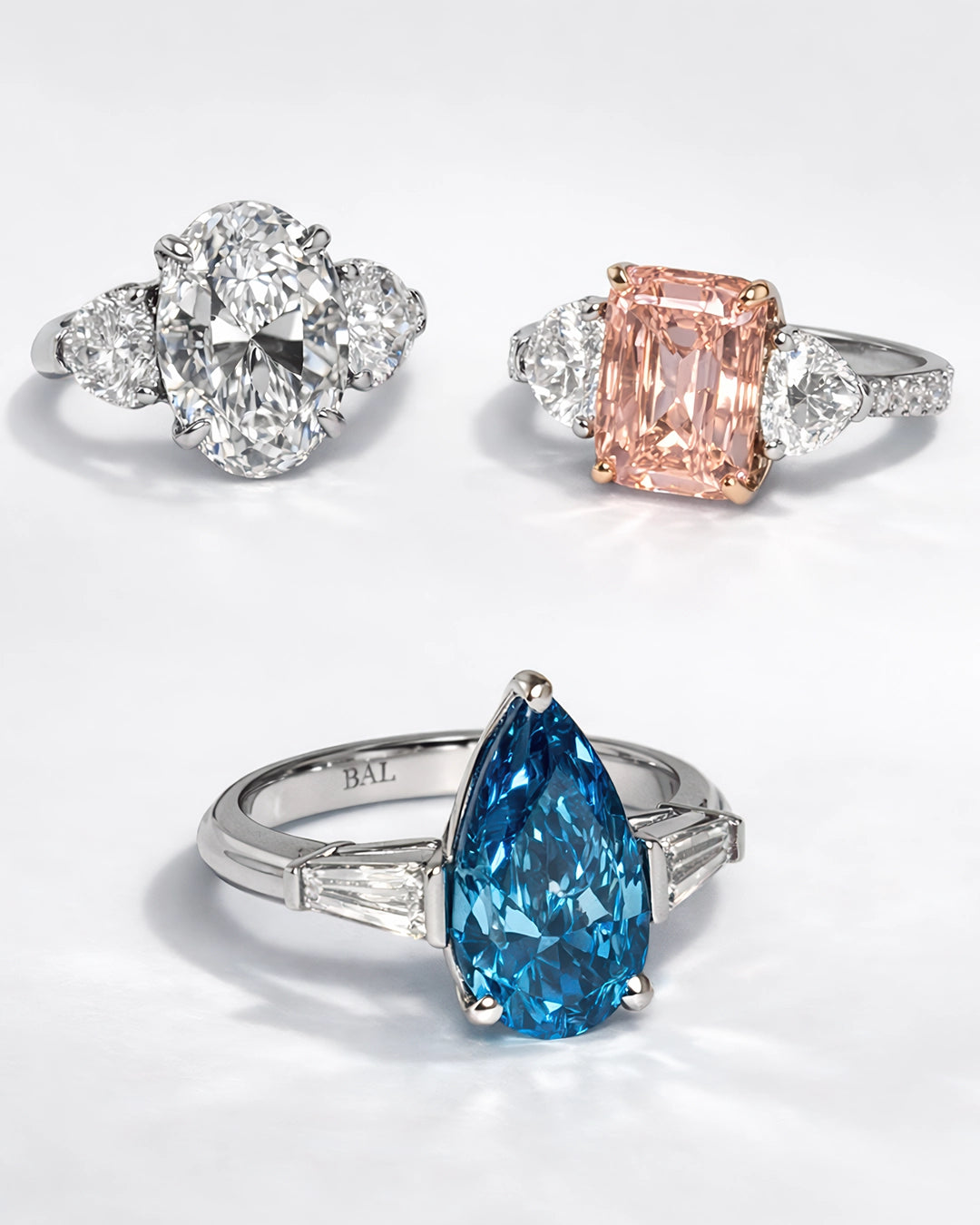

 Round Lab Diamond Engagement Rings
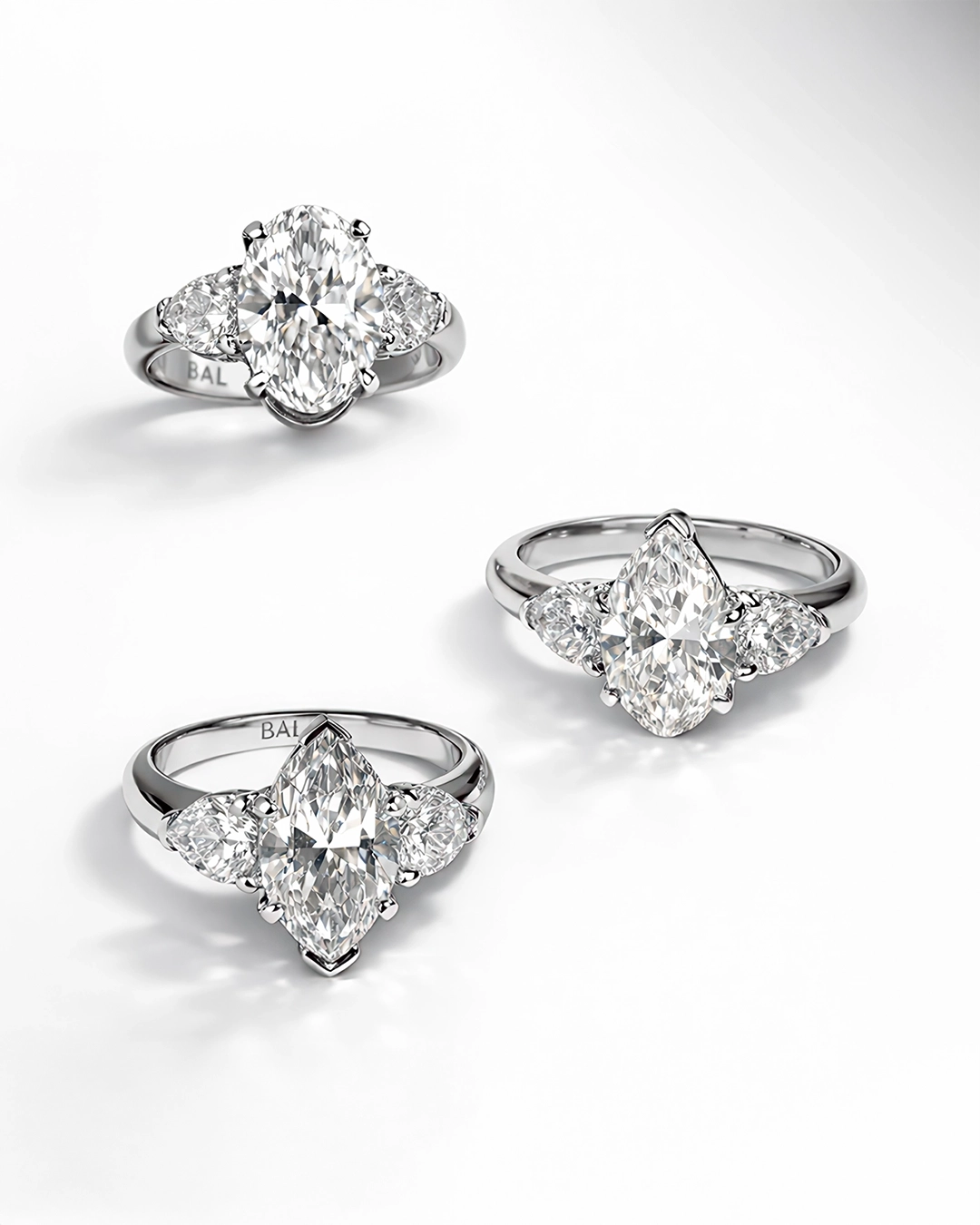
 Oval Lab Diamond Engagement Rings
 Pear Lab Diamond Engagement Rings
 Cushion Lab Diamond Engagement Rings
 Emerald Lab Diamond Engagement Rings
 Radiant Lab Diamond Engagement Rings
 Heart Lab Diamond Engagement Rings
 Marquise Lab Diamond Engagement Rings
 What are Lab-Grown Diamonds ?
 Lab-Grown vs. Natural Diamonds
 CVD vs. HPHT
 What are the 4Cs?
 How to read a diamond certificate ?
 Fancy Color Grading
 Ring Sizes
 Pendant Lengths
 Bracelet Sizes
 Metals Guide: 14k or 18k Gold?
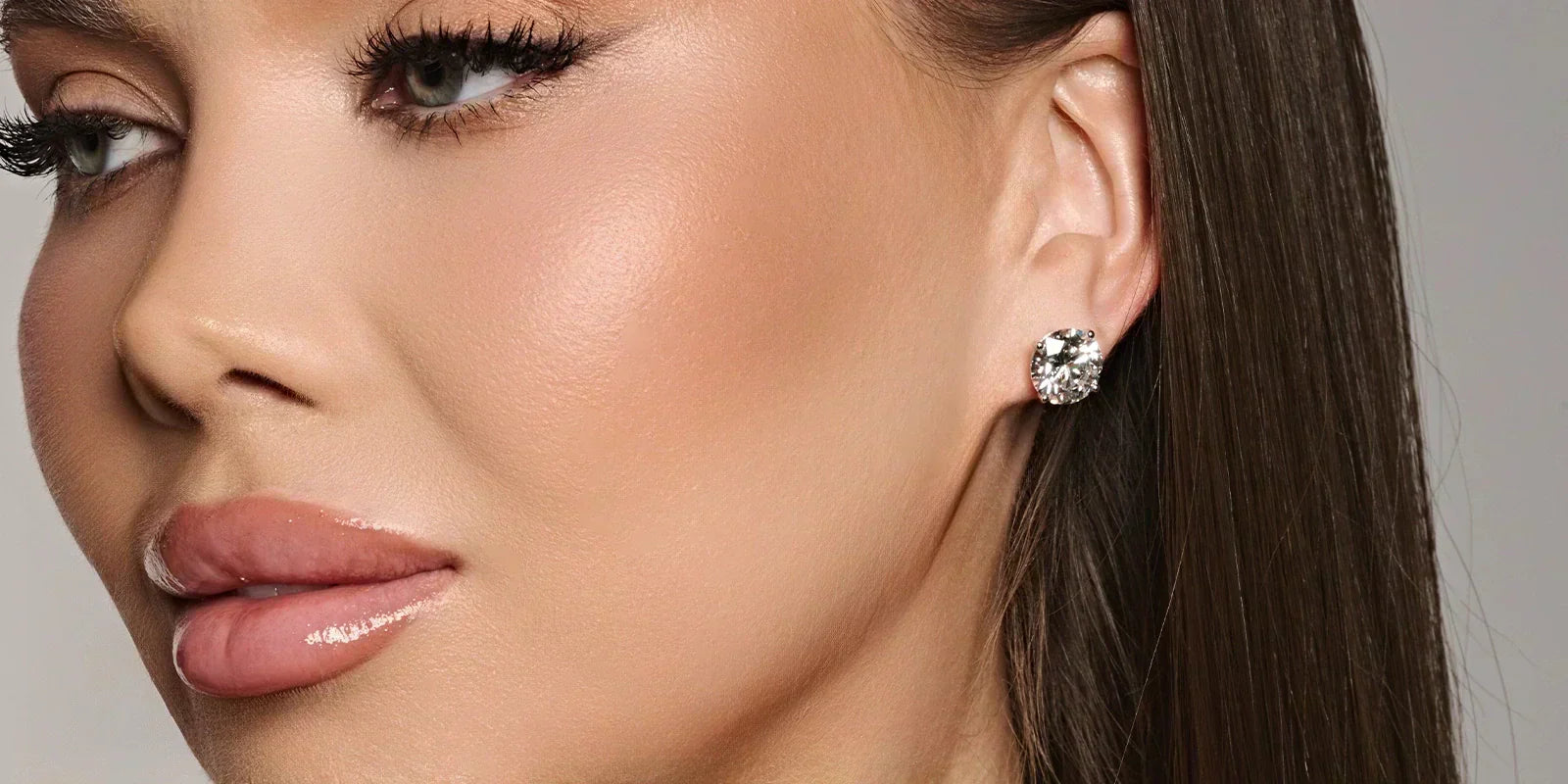
Lab-Grown Diamond Stud Earrings: Sizes, Settings & How to Choose
The perfect pair of lab grown diamond stud earrings is one of the most enduring purchases in fine jewelry. No occasion required, no outfit they don’t work with. Here is everything you need to choose your lab-grown diamond stud earrings with confidence.
Why Are Diamond Studs the Ultimate Foundation Piece?
Of every fine jewelry category, the lab grown diamond stud earring is the one with the highest wear frequency. Rings get removed. Necklaces stay in the drawer on certain days. Lab diamond earrings go in and stay in. They work at a board meeting, on a flight, at a dinner, at the gym. They require no styling decision. They simply work.
The format is also the most democratic in fine jewelry. The same design logic applies whether the stone is 0.50ct or 5ct per ear. What changes is presence and scale. What stays constant is the precision required to do the piece correctly: the right cut, the right setting, the right proportion between stone and mounting.
The lab grown diamond stud earring is not a simple piece. It is the piece where every detail shows because there is nothing else to look at.
Lab-grown diamonds have made exceptional lab diamond earrings genuinely accessible. A 3ct per ear pair in excellent cut, near-colorless grade, with certified stones, is now within reach for a much wider range of clients than it was five years ago. The diamond is real. The difference is origin and price.
Shop our lab diamond earrings ➤
What Diamond Shapes & Styles Are Available for Lab-Grown Diamond Stud Earrings?
The shape of a lab-grown diamond stud determines its entire visual character, how much light it returns, how it sits on the ear, and what it communicates aesthetically. Each shape has a distinct personality.
CLASSIC SHAPES
ROUND BRILLIANT
Maximum brilliance. The classic. 58 facets optimized for light return. The benchmark all other shapes are measured against. |
OVAL
Elongated elegance. Appears larger per carat than round due to greater surface coverage. Flattering and fashion-forward. |
PRINCESS
Square, modern, architectural. Strong geometric presence with high brilliance. A clean alternative to round. |
CUSHION
Soft corners, vintage warmth. High brilliance with a romantic edge. A classic choice with contemporary appeal. |
EMERALD
Step-cut. Long open facets, mirror-like clarity. More depth, less fire. For clients who favor architectural elegance over brilliance. |
ASSCHER
Square step-cut. Geometric, structured, quietly bold. Concentric facets that draw the eye inward. The more architectural alternative to the emerald cut. |
PEAR
Single point, rounded base. The brilliance of a round with an elongated silhouette. Directional and expressive. Photographs exceptionally well. |
MARQUISE
The most elongating cut in fine jewelry. Maximizes surface area per carat, reads larger than its weight. Bold and fashion-forward. Built for visual impact. |
HEART
The most symbolic cut in fine jewelry. A modified brilliant with a precise cleft and two even lobes. Symmetry is everything. The shape only works when perfectly executed. Intentional and unmistakable. |
SQUARE CUSHION
Cushion proportions in a square ratio. Larger facets, softer corners, higher brilliance. Warmer and more romantic than a princess cut. A modern take on a vintage favorite. |


MULTI-SHAPE & SPECIALTY DESIGNS
At BÄL, the design possibilities extend beyond single-stone solitaires. Our lab-grown diamond stud earrings are also available in the following configurations:

Trilogy (Three-Stone Shape) Studs:
Three lab-grown diamond shapes set in a linear or cluster arrangement on a single earring. The trilogy style adds dimension and presence, with the combined brilliance of multiple stones creating a larger visual impact without a single large center stone.

Two-Shape (Toi & Moi) Stud Earrings:
Two different diamond shapes paired together within a single earring. The interplay of contrasting shapes such as a round brilliant alongside a pear or an emerald cut paired with a heart creates a sophisticated visual tension that elevates the piece beyond a standard solitaire.

Multiple-Shape Designs:
For clients who seek a more expressive aesthetic, BÄL offers multi-shape configurations that combine three or more distinct diamond cuts on a single earring. These designs are crafted at our Dubai atelier on a made-to-order basis and allow for a high degree of personalization.
For lab grown diamond stud earrings specifically, round brilliant and oval are the highest-performing shapes in terms of light return and visual impact. The step-cut shapes, emerald and Asscher, prioritize clarity and architectural depth over sparkle, and are an excellent choice for clients who prefer a quieter, more refined aesthetic.
Pear and marquise studs have a clear orientation on the ear, which adds a fashion dimension not present in symmetrical shapes. Worn point-up or point-down, they create a directional look that photographs especially well.
What Size Diamond Studs Should You Choose?
For lab grown diamond stud earrings, carat weight is almost always discussed per ear and that is how BÄL presents it. When a client says “I want 2 carat studs,” they mean 2 carats per ear: a 4 ct total weight pair. Always confirm which convention a seller is using before comparing prices.
|
|
|
|
|
|


SIZE REFERENCE PER EAR
|
Per Ear |
Pair Total |
Profile |
Description |
|
0.50 ct / ear |
1.00 ctw pair |
Delicate & everyday |
Clean, refined presence. Ideal as a first lab grown diamond stud or a piece worn without removal. |
|
1.00 ct / ear |
2.00 ctw pair |
The classic benchmark ★ |
Visible and intentional. The most requested size. Substantial enough to make an impression without becoming a statement piece. |
|
2.00 ct / ear |
4.00 ctw pair |
High presence |
Clearly visible across the room. Moves confidently from everyday to occasion wear. |
|
3.00 ct / ear |
6.00 ctw pair |
Strong statement |
Substantial and commanding. A deliberate choice. The kind of piece that becomes a signature. |
|
5.00 ct / ear |
10.00 ctw pair |
Maximum presence |
Exceptional. Designed to be seen. Stones of this size in excellent cut are genuinely breathtaking. |
One important note: apparent size varies significantly by shape. An oval or pear of 2 ct per ear will appear meaningfully larger on the lobe than a round of the same weight, because elongated shapes cover more surface area. If visual size matters and it often does, shape selection is part of the sizing decision, not separate from it.
What Types of Settings & Construction Are Used in Diamond Stud Earrings?
The setting of a lab grown diamond stud earring determines how the stone sits, how much of it is visible, and how the piece behaves over time. Each setting type has distinct aesthetic and practical properties.
PRONG SETTING (THREE, FOUR OR SIX PRONG). The most popular setting for lab-grown diamond stud earrings. Fine prongs hold the stone at the girdle, leaving the crown and table fully exposed. This maximizes light entry and return. The stone is almost floating above the ear. Three-prong settings offer the most open, minimal profile and maximum stone exposure with the least amount of metal visible. Four-prong settings have a cleaner, more modern look. Six-prong settings offer more security and a classic, jewel-like appearance.
BEZEL SETTING. A continuous metal rim surrounds the stone completely around its perimeter. The most secure of all settings and the most minimal in appearance. The metal band creates a clean frame around the diamond that complements both modern and architectural aesthetics. Note that a full bezel reduces the light entering the stone from the sides, a trade-off between security and brilliance.
HALO SETTING. A center stone is surrounded by a ring of smaller pavé-set lab-grown diamonds. This setting dramatically increases the apparent size of the piece. A 0.50 ct center stone in a halo can appear as large as a 1.00 ct solitaire. It adds brilliance and presence without a proportional increase in budget.
CLAW, PETITE CLAW, ROUND & TAB PRONGS

The prong is a small detail that quietly shapes the entire look of an earring. Here's a quick breakdown of the four main types.
Claw prongs have a pointed tip that grips the stone at a sharp angle. Clean, contemporary, and great for brilliance because they let more light in from the sides.
Petite claw prongs are the same idea, just scaled down. Thinner, lighter, almost invisible so the diamond does all the talking. A favorite for studs where you want maximum stone, minimum metal.
Round prongs have a soft, domed tip. More classic in feel, gentler on clothes, and a natural fit for everyday wear.
Tab prongs are a flatter, ribbon-like prong that folds over the stone rather than gripping it. Very architectural, very flush. Works especially well with step-cut stones like emerald or asscher cuts.
No option is better than another. It really comes down to the stone shape, the setting style, and the look you're going for. At BÄL, it's something we go through with every client during the configuration process because this kind of detail actually matters.
MOUNTING PROPORTIONS: THE BÄL DIFFERENCE
At BÄL, every mounting is engineered for balance. The post gauge, prong height, setting depth, and backplate dimensions are all calibrated so the earring sits flush and centered against the earlobe without tipping forward. A poorly proportioned stud tilts. A well-proportioned one looks like it grew there.
18k Gold Stud Earrings: Metal, Purity & Skin Safety
Every BÄL piece is made exclusively in 18k gold. For lab diamond earrings specifically a piece in direct and prolonged contact with sensitive skin, the choice of metal matters beyond aesthetics.
|
18k Yellow Gold
75% pure gold. The richest, most saturated finish. Warm and classic. Complements all stone colors and setting styles. |
18k White Gold
75% pure gold, alloyed with white metals. Cool, clean, and contemporary. Lets the stone take full focus regardless of color. |
18k Rose Gold
75% pure gold with a copper alloy. Warm, soft, and distinctly modern. A versatile finish that works across all stone colors too. |


NICKEL-FREE & HYPOALLERGENIC
All BÄL lab diamond earrings in 18k gold are nickel-free. Nickel is the most common cause of metal contact allergy and is frequently used as a hardening alloy in lower-grade gold jewelry. At 18k purity, BÄL alloys are formulated without nickel making them safe for sensitive skin and compatible with even the most reactive ears.
If you have experienced reactions to jewelry in the past, the cause is almost always the metal, not the stone. Switching to 18k nickel-free gold resolves the issue in the vast majority of cases. 14k gold contains a higher proportion of alloy metals and is more likely to cause reactions in sensitive individuals. 18k is the correct standard for long-wear lab grown diamond stud earrings.
Read our 14k vs 18k Gold Full Guide➤
Which Earring Back Closure Is the Best for Your Lab Diamond Stud Earrings?
The back of a lab grown diamond stud earring is as important as the front. The closure determines security, how the stone sits on the ear, and how the piece looks in wear, not just how it holds.
|
|
|
|
STANDARDButterfly Two spring-loaded wings grip the post. Simple, lightweight, and universally compatible. The standard closure for everyday lab-grown diamond stud earrings. Easy to put on and remove, practical for smaller stones worn daily. Best for: 0.50 – 1.00 ct / ear
|
SECUREGuardian A reinforced push-back with a more structured grip mechanism than a standard butterfly. Offers increased security and a firmer hold on the post. More resistant to accidental loosening during wear. Best for: 1.00 – 2.00 ct / ear
|
BÄL EXCLUSIVEBÄL Disc-Back A butterfly mechanism fitted with a solid disc at the back. The disc acts as a counterweight, distributing the weight of the stone evenly across the earlobe and ensuring the earring motif stays perfectly upright and centered at all times. Standard on all BÄL lab grown diamond stud earrings from 2 ct. Best for: 2.00 ct / ear and above.
|


A stud that tilts is a stud that doesn’t perform. The disc-back is not a comfort accessory, it is a precision component. For lab diamond earrings of 2ct and above, it is the only closure that lets the diamond do what it was cut to do.
The visual difference is immediate. A 3ct round brilliant sitting flush and centered on the lobe captures and returns light in every direction. The same stone tilted forward at even a few degrees loses that performance. The table no longer faces the viewer, and the brilliance drops. Closure type is not a secondary decision for significant lab-grown diamond stud earrings. It is part of the design.
How to Take Care of Lab Diamond Stud Earrings?
Lab grown diamond stud earrings are among the most durable pieces in fine jewelry but daily habits make the difference between stones that stay brilliant for years and stones that gradually lose their sparkle. The diamond itself is indestructible under normal wear. What needs protecting is the setting and the surface build-up that dims light performance over time.
WHEN TO REMOVE YOUR STUDS
-
Before showering and washing hair
Shampoo, conditioner, and shower products contain surfactants, silicones, and emollients that gradually accumulate inside prong settings and beneath the stone. This build-up doesn’t damage the lab-grown diamond but it coats it, layer by layer, reducing the light that enters and exits the stone. Remove your lab grown diamond stud earrings before every wash.
-
Before sleeping
Sleeping in stud earrings increases the risk of the post bending under pressure and the back gradually loosening over repeated nights. For larger stones, the weight of the piece adds mechanical stress on the post during sleep. Removing studs before bed is the simplest habit that protects both the mounting and the security of the stone long-term.
-
Before swimming
The main risk in water is loss. A loosened back in a pool or the sea is a stud you will not recover. Beyond security, chlorinated water and saltwater carry minerals and chemicals that accumulate on the stone and in the setting alongside body oils and sunscreen, leaving a film that dulls brilliance. Remove lab diamond earrings before entering any pool, sea, or hot tub.
-
Before applying products to your ears or neck
Perfume, hairspray, and skincare products particularly those containing acids, alcohol, or oils leave deposits on stones and can affect the surface finish of the gold over time. Products first, earrings after. Never spray or apply anything directly onto or near the piece.
CLEANING YOUR STUDS AT HOME
-
Soak in warm (not hot) water with a small amount of mild dish soap for 10 to 15 minutes. This loosens product and oil build-up in and around the setting without affecting the gold or the stone.
-
Use a soft toothbrush, extra soft bristles only, to gently brush around the prongs and beneath the stone. This is where the most build-up collects and where cleaning makes the most visible difference.
-
Rinse under lukewarm running water. Always block the drain first. This is the step where earrings are most commonly lost.
-
Pat dry with a lint-free cloth and allow to air dry completely before storing or wearing.
PROFESSIONAL SERVICING
In addition to at-home care, we recommend having your lab grown diamond stud earrings professionally serviced if you detect anything unusual. A professional inspection should include a thorough prong check by a qualified jeweler to identify any loosening or wear before it becomes a security risk, as well as professional ultrasonic cleaning to remove accumulated build-up that home cleaning cannot fully address. Regular professional servicing not only preserves the brilliance of your lab diamond earrings, it protects the longevity and structural integrity of the setting over years of daily wear.
STORAGE
Store lab grown diamond stud earrings individually in a soft-lined box or pouch, separated from other pieces. An earring roll or compartmentalized case keeps the pair together and prevents contact between jewelry. Diamonds will scratch other stones and metals if stored loosely.
Remove before the shower. Remove before sleep. Clean once a month. Professional service if any doubt. Four habits, that is the entire maintenance routine for a piece that should last a lifetime.
How To Choose the Right Diamond Stud Earrings? The BÄL Approach
Every BÄL lab diamond stud earring is made to order at our Dubai atelier. Stone shape, carat weight per ear, setting style, gold color, and closure type can all be configured to your specification. There is no shelf stock. Each pair of lab-grown diamond stud earrings is built for the client who ordered it.
For clients outside Dubai, the full catalog is available online with worldwide shipping. Ready-to-ship configurations are available for immediate purchase. For clients based in or visiting Dubai, private appointments are available at our showroom at the Gold & Diamond Park.
-
Start with size, then shape. Decide on the carat weight per ear first. Then choose a shape that delivers the visual presence you are looking for. An oval reads larger than a round at the same weight.
-
Prioritize cut above all else. An excellent-cut lab-grown diamond of VS2 clarity will outperform a poorly-cut VVS1 in every lighting condition. Cut drives brilliance. Brilliance drives the impression the piece makes.
-
Match the stones to each other. For a pair of lab grown diamond stud earrings, the two stones must be matched in color, clarity, cut, and visual performance. Our diamantaires hand-select every pair for consistency. This is not automated or graded by certificate alone.
-
Choose your closure based on stone weight. Under 1ct per ear, a butterfly back is the right choice. From 1ct to 2ct, an alpha back offers added security. From 2ct and above, the BÄL disc-back is standard. It keeps the stone upright, flush against the lobe, and performs at its best. Closure is part of the design, not an afterthought.
-
Confirm certification. All BÄL stones above 1.00ct are independently certified. For a pair with 1ct per ear, both stones carry certificates. Ask for them. They matter for insurance and for peace of mind.
Discover our Lab Diamond Earrings Collection➤